Failure Modes of RPA Tools in EHR Environments
RPA tools fail silently in EHR systems because they depend on unstable interfaces.
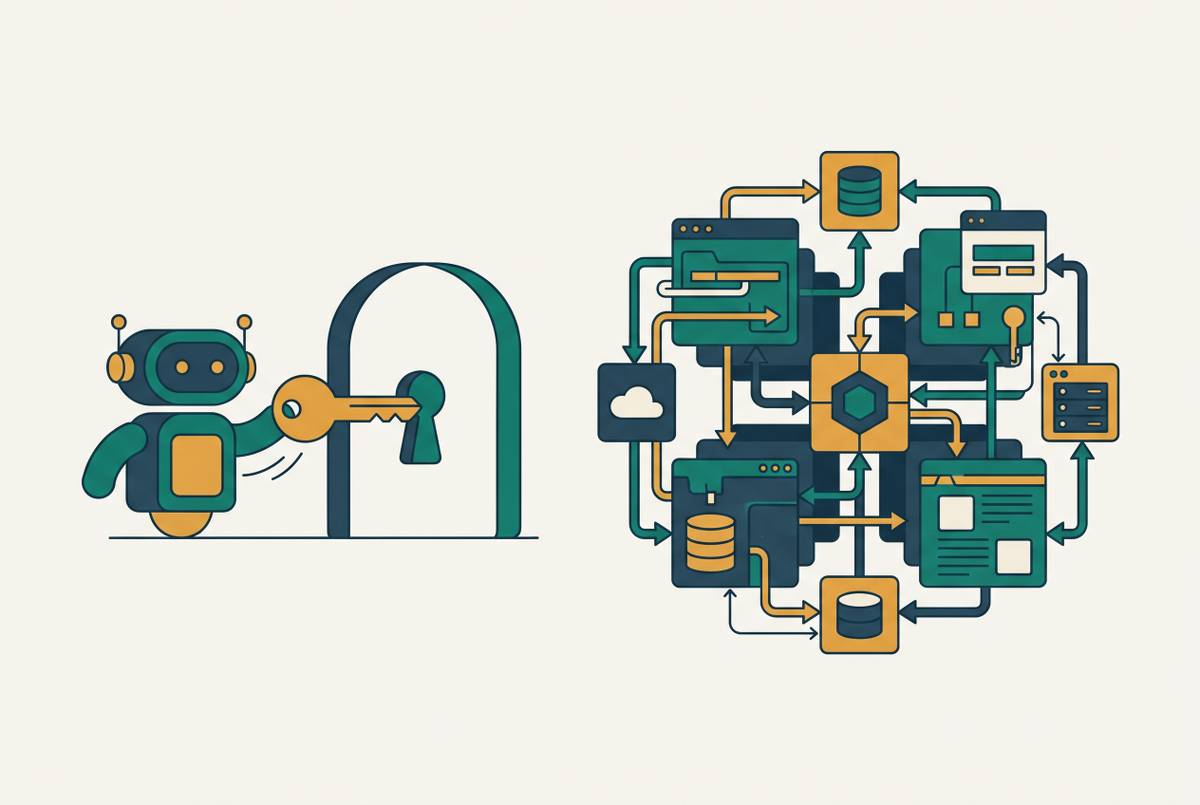
RPA showed up in electronic health record systems because vendors locked the front door and automation teams went in through the window. It was never a planned integration strategy. It was the path of least resistance for teams that needed data out of systems that were not built to give it up easily.
The core obstacle has stayed remarkably stable over the past decade: EHR vendors control access to essential data, and that control has not loosened much despite genuine advances in APIs and natural language processing. RPA filled the resulting gap by mimicking a human user inside the interface itself, clicking buttons and reading fields the same way a billing clerk would, which let automation teams skip the vendor approval process entirely. Traditional APIs, where they existed, were secure and structured, limited in scope, costly to license, and slow to expand as workflows changed. RPA cost less up front and required no cooperation from the vendor whatsoever, so it won by default rather than by design.
The 21st Century Cures Act has since forced EHR vendors to open some of that access, and vendors can no longer block data requests outright the way they once did. RPA still operates at the presentation layer, reading and clicking through interfaces it does not own and cannot control. Every failure mode discussed in this piece traces back to that one condition: automation built to survive on borrowed ground.
Selector-based RPA
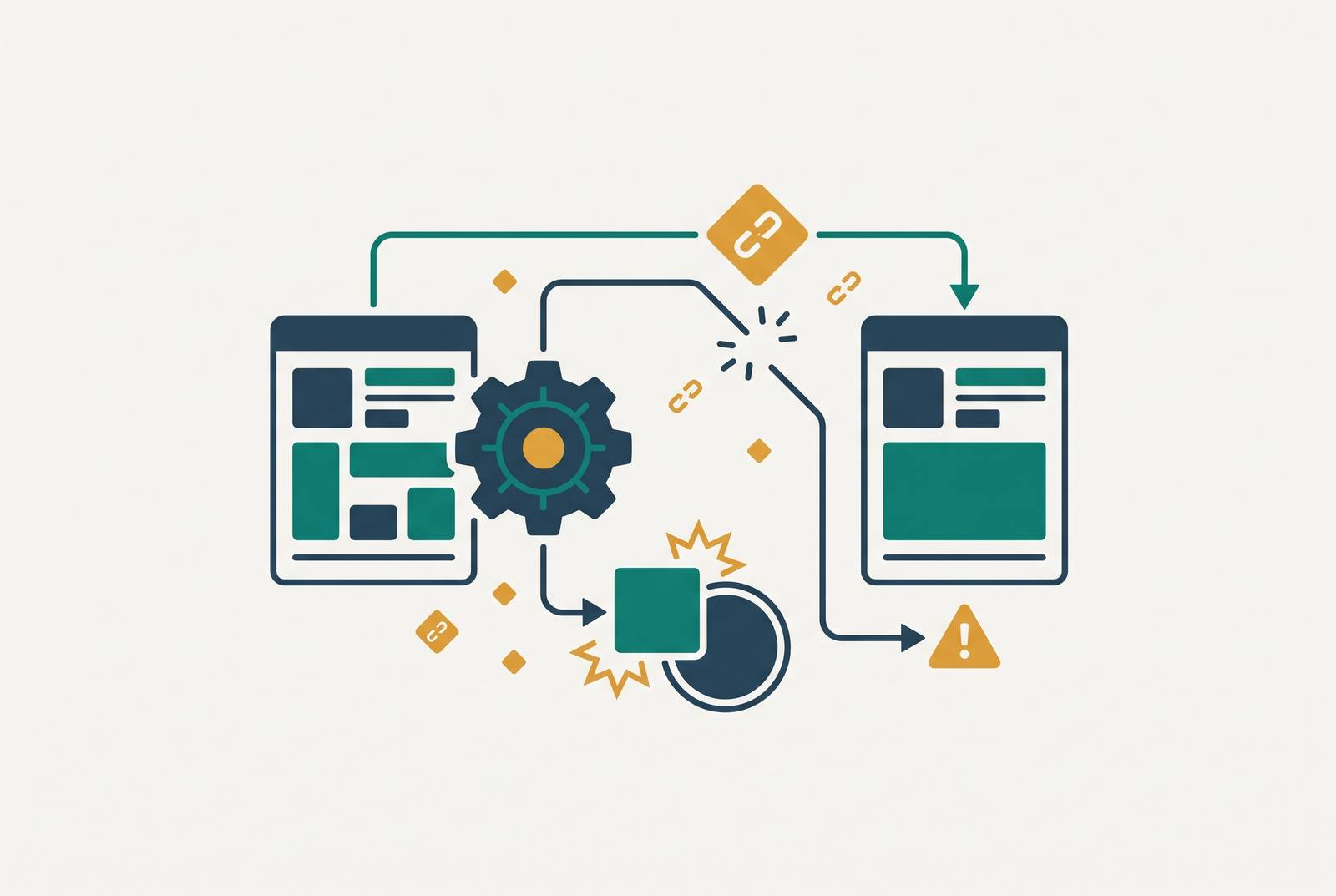
Selector-based RPA targets fixed DOM elements, selectors, XPaths, screen coordinates, and clicks, types, or reads from that exact spot every time the script runs, so changes to the underlying UI can break the script. That works fine as long as the underlying page never changes. It fails the moment it does.
When a payer updates their portal layout, any script relying on CSS selectors or XPaths breaks immediately, the core fragility of traditional RPA and Selenium-based automation. That is what a selector-based system does by design when the surface it memorized no longer matches the surface in front of it. The bot has no concept of what the button means, only where it used to be, so it cannot adapt or infer intent the way a person glancing at a redesigned page could.
The dependency on the presentation layer produces every fragility story in healthcare automation: the same vendor update can break a bot in one clinic while a human user notices nothing changed.
Why EHR and payer portal environments resist selector-based bots
If selector-based RPA needs a stable target to survive, healthcare automation chose about the worst possible environment to operate in. UnitedHealthcare Optum, Cigna, Aetna, Humana, and regional BCBS plans each built proprietary web interfaces for prior authorization submission, few natively designed for automation. Clearinghouse integrations such as Availity and the X12 278 EDI standard exist, and CMS-mandated FHIR Prior Authorization APIs are required by January 2027, but every payer still uses different forms, fields, and documentation requirements in the meantime.
Layer onto that the ordinary defensive measures every portal uses against bots in general: session timeouts that fire without warning, TOTP-based multi-factor authentication and SMS codes that appear on an unpredictable schedule, and CAPTCHAs that pop up at random intervals. Each one of those is a distinct point where a script can stall out completely. Hospitals, meanwhile, are pulling external information through an average of 4.1 different methods out of nine available options, so a bot has to succeed across a genuinely fragmented set of environments rather than one predictable channel.
The X12 278 transaction standard covers the majority of prior authorization types, but the remainder (complex multi-service requests and out-of-network cases) still require submission through a payer's own portal. Those are exactly the cases where RPA connectors fail most visibly, because they sit outside the one standardized rail available and depend entirely on a proprietary interface holding still. EHR vendors have also historically resisted RPA on performance and security grounds, and while regulatory mandates have forced some accommodation, the interfaces themselves remain unpredictable regardless of the vendor's stated policy.
Vendors in this space are not blind to the maintenance burden this creates. Vendor documentation buries that caveat deep, away from the sales conversation, and a practice only discovers it once a UI change breaks a workflow that was working the week before. The maintenance burden is systematically underrepresented at the point where a health system is deciding whether to buy.
The twelve recurring failure patterns and the two that matter most
The structural conditions above do not produce random breakage. They produce a recognizable, repeatable set of failure patterns, twelve of them in total, that account for nearly everything that goes wrong with RPA in healthcare settings. Two dominate the damage: a bad workflow trigger, where the bot starts a process on a false or malformed signal, and the absence of a production feedback loop, where nobody downstream ever learns that the bot's output was wrong.
Several of the other ten patterns recur constantly in prior authorization work. Policy changes break stale systems: when a payer updates its authorization rules, a bot still running on the prior logic will submit requests that are structurally invalid before a human ever reviews them. There is also what practitioners call the prior authorization iceberg. Visible automation, the lookup, the form fill, the status check, covers only the portion of the process that happens on a screen. A mass of portal, IVR, phone, fax, mail, and email work sits beneath that surface, and a bot handling only the visible screen leaves it completely untouched.
Timing failures compound the problem. In the common late-identification pattern, a prescription goes to the pharmacy, and the need for prior authorization is only discovered when the pharmacist runs the claim, two to three days after the clinical encounter that generated it. Automation aimed only at submission, rather than early detection, does nothing to close that gap and can end up perpetuating the same delay it was meant to fix. And in legacy setups, denials frequently generate no follow-up at all: the bot reads the stated denial reason, logs it, and stops, leaving the appeal step to a human who may never see the alert. That particular gap, a denial with no downstream action, is one of the most common ways prior authorization work quietly stalls out for good.
Silent failure costs
Twelve recurring failure patterns explain most RPA outcomes in healthcare, with bad workflow trigger and no production feedback loop the top two. The real damage comes from silent failure: a bot submits an incomplete request, times out mid-session, or gets stopped cold by a CAPTCHA, and no one is notified. Clinical and financial harm accumulates in the gap between what staff believe happened and what actually happened, and that gap often surfaces only much later.
Consider what that gap means for a clinician. When authorization was never actually obtained and the bot never said so, the treating physician has no way to know that a step in the process silently failed. The harm here comes from that missing information, not from the denial itself, because a denial at least generates a paper trail a staff member can act on. A majority of physicians report having seen prior authorization requirements cause patients to abandon a recommended treatment course, sometimes or often, and silent automation failure is one of the mechanisms sustaining that pattern.
The financial side runs on the same logic. Rework from a broken bot does not simply erase the labor savings the automation promised. It adds a diagnostic step, someone has to figure out where the process failed, on top of the original manual work the bot was supposed to eliminate. A 2025 survey found clinicians losing a substantial share of each working day to administrative tasks, and rework generated by silently broken automation compounds that burden rather than easing it. More than half of revenue cycle leaders say they expect their operations to become less effective unless they change course quickly, pointing to rising denials, claims processing inefficiencies, aging accounts receivable, and labor shortages as the biggest threats. At scale, the stakes rise further still. Innovaccer's Flow product line covers end-to-end revenue cycle automation including prior authorization, autonomous AI medical coding, clinical documentation, denial management, and collections, across more than 200 health systems and payers. At that scale, a silent failure pattern becomes a systemic risk rather than a local inconvenience. It is a systemic risk that propagates across every organization plugged into the same automation stack.
How HIPAA enforcement treats RPA bots that touch PHI
Every RPA bot that reads, writes, or transmits protected health information is a covered system under HIPAA, whether or not the organization deploying it thinks of it that way. Most have not updated their risk analyses to reflect it, and that gap is precisely the kind enforcement activity has started to expose.
A proposed update to the HIPAA Security Rule would remove much of the flexibility organizations previously relied on, making safeguards that used to be optional, encryption of data at rest and in transit among them, mandatory once a final rule takes effect. Under that standard, every AI data pathway, including the API calls a bot makes and the temporary caches it uses to hold data mid-process, would need to run on FIPS 140-3 validated cryptographic modules. Risk assessments would also need to provide a full inventory of every AI system touching PHI. As Danielle Barbour of Kiteworks puts it, a risk analysis that makes no mention of AI agents operating in an environment where they are actively accessing PHI will not satisfy the updated standard.
Enforcement data already points in this direction. Failure to conduct an adequate security risk analysis was the single most common finding in OCR enforcement actions in 2025, and ransomware was the most frequent triggering event behind those investigations. BayCare Health System faced a significant OCR settlement tied to access control failures and lapses in reviewing information system activity, a case that illustrates how misconfigured automation touching PHI draws regulatory attention regardless of whether any harm was intended. The risks tied to AI systems are systemic: a single failure in an AI agent can expose thousands of records at once, and there is no natural quarantine boundary when an agentic system operating across live payer portals goes wrong. None of this makes RPA categorically noncompliant. The compliance burden is specific and currently unmet in most deployments still running on outdated risk documentation.
Whether agentic AI solves the fragility problem
Vision-based agents represent the most serious challenge to everything argued above, because they read an interface visually, the way a person would, rather than hunting for a fixed selector in the page's code. That approach removes the exact fragility mechanism described earlier: a redesigned button no longer breaks the automation, because the agent is looking at the screen rather than a memorized address. Agentic systems maturing through 2026 go further still, managing entire end-to-end workflows with bounded autonomy and making decisions from real-time data rather than simply moving it from one field to another. The prevailing view is that agentic AI solves fragility by reading the interface visually rather than relying on hardcoded selectors, making it resilient to UI changes.
That argument has a serious counterweight. A vision-based agent that misreads a field, hallucinates an action it never should have taken, or drifts off task fails in a way that is genuinely harder to audit than a selector-based bot, which at least throws a clear error and stops. A selector failure leaves a stack trace. A vision-model failure can leave a completed action that looks correct and is not, with no obvious signal that anything went wrong. Adoption of AI in claim denial management remains low: organizations need confidence in the technology, and vendors must ensure transparency and auditability without introducing new complexities. The trust gap here is measurable in adoption rates, not just sentiment.
RPA has not disappeared as a result. RPA hasn't disappeared, it's transformed: AI agents don't replace RPA, they expand its reach, and the practical question for administrators is how to evaluate which approach handles which failure mode responsibly.
What administrators should evaluate before choosing an automation approach
Every failure mode described above doubles as a question a buyer should be asking before signing a contract, not a risk to monitor after deployment.
Start with detection, not capability. Ask whether the vendor's system can tell a completed action from a failed one, and ask for a specific example of what happens when a payer portal changes its layout mid-contract. A vendor that cannot describe its own failure signal clearly is not going to surface silent failures once they start occurring in production.
Push directly on how the vendor handles ongoing maintenance costs, since that is what vendors bury deepest. Ask which payers are handled through the X12 278 standard versus which depend on RPA connectors reading a proprietary portal, since the remainder of authorization types require portal-based submission where bots fail most visibly. Ask, too, whether the contract includes ongoing maintenance for those non-standardized connections or whether that cost gets passed back to the practice once something breaks, the way Valer's own documentation quietly acknowledges it can.
On the compliance side, ask for the current HIPAA risk analysis and confirm it names the automation system explicitly, since every bot that touches PHI is a covered system and most organizations have not updated their risk analyses to enumerate them. Ask what cryptographic standard protects data while it sits in the bot's temporary cache, since every AI data pathway must use FIPS 140-3 validated cryptographic modules.
Finally, ask what happens in the twelve recurring failure patterns discussed here specifically, the bad trigger and the missing feedback loop above all. A vendor who answers in generalities about "AI-powered efficiency" is describing a pitch instead of a system built for the structural realities of prior authorization work.