Staff HIPAA Training Obligations When Introducing AI Tools
Deploying AI in medical practice triggers existing HIPAA training obligations staff may not know.
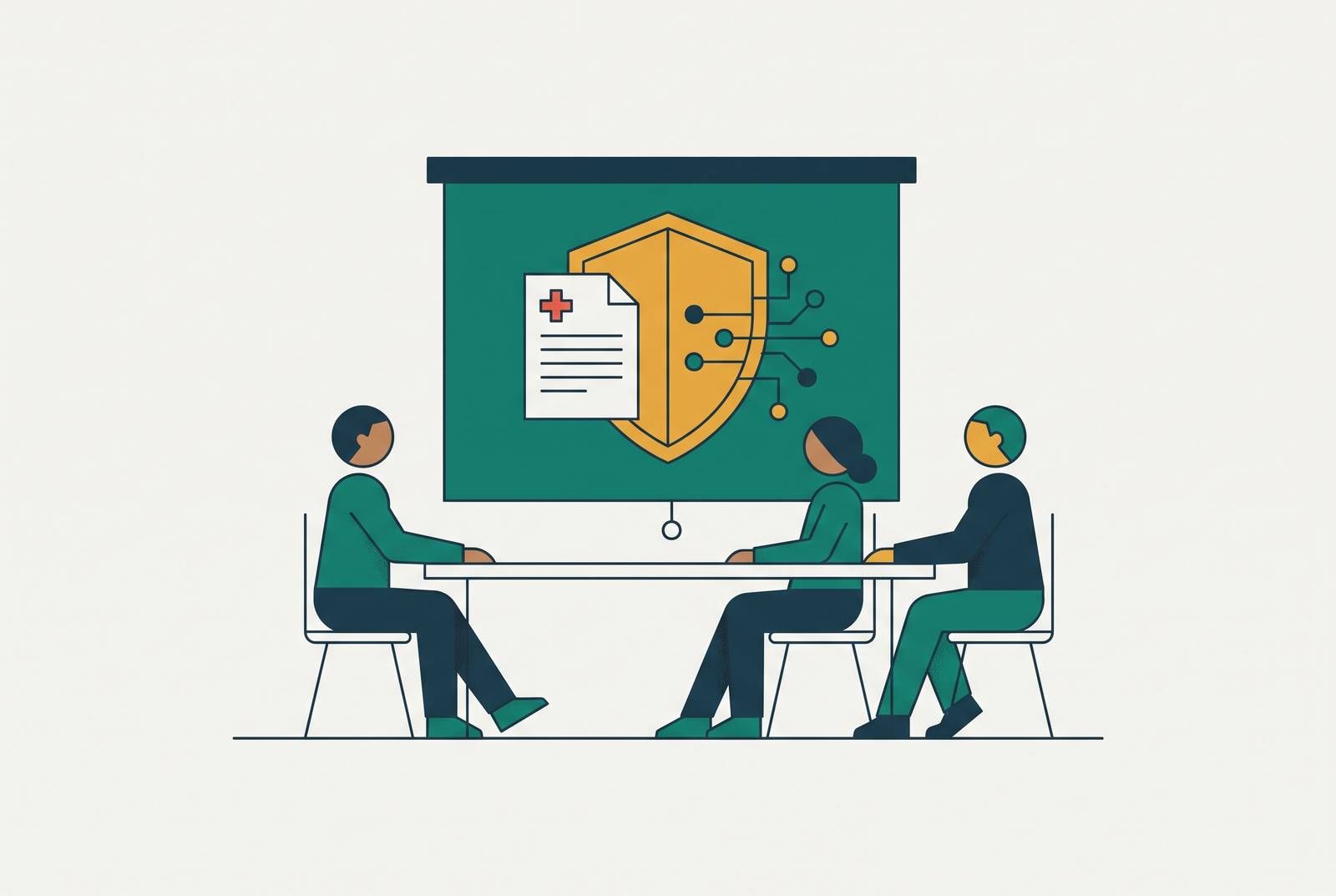
Deploying an AI tool in a medical practice triggers HIPAA training obligations that already exist in federal rule text.
Deploying an AI tool in a medical practice as a material policy change under HIPAA
The phrase to hold onto is "material policy or procedure change." An AI system falls under the Security Rule as soon as it handles patient data, whether it's a clinical decision-support tool or a computer-using agent that works across an EHR and payer portals like those Novoflow deploys, so it triggers training obligations as a material policy change.
What has shifted in 2026 is not the text of the rule but the expectation around it. The training obligation this creates does not stop at the clinical staff. HHS has been clear that there is no single training template that fits every covered entity. That flexibility shapes how a practice builds its program, but it does not excuse the practice from building one.
The PHI surfaces traditional HIPAA training never addressed
AI tools open up exposure points, and a standard new-hire orientation or annual Privacy Rule refresher was never built to cover them. What pulls an AI system into HIPAA's reach is what it touches, not how advanced it is. The same underlying model falls squarely inside HIPAA the moment it ingests a patient record, a claim, or any other piece of protected health information.
Four categories of AI appear in healthcare workflows, and each carries its own exposure. Generative AI, the ambient documentation tools that draft clinical notes and the chatbots that answer patient questions using PHI, raises a separate worry: whether that patient data is being sent to systems that lack the safeguards HIPAA requires.
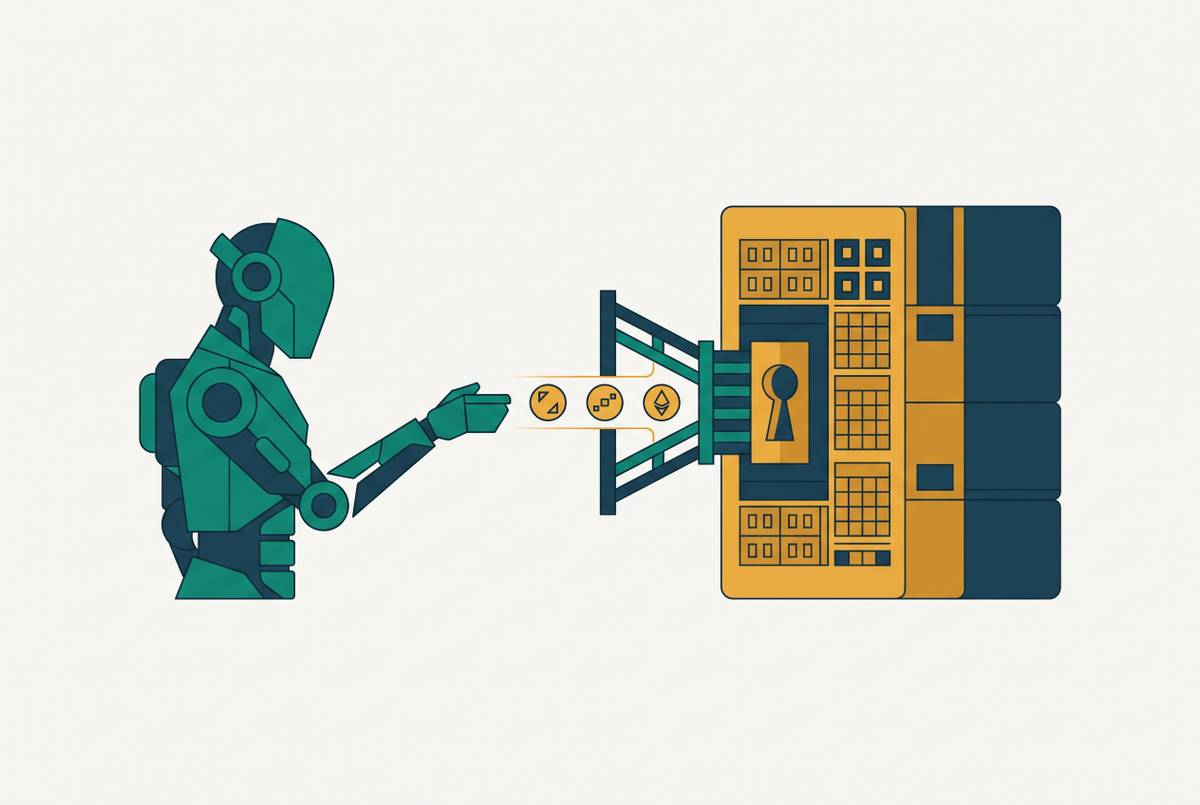
Three exposure surfaces belong to AI specifically, and they rarely appear in older training material. Autonomous agents handed direct access to EHRs, inboxes, and payer portals to complete end-to-end workflows introduce a surface that traditional training rarely addresses: the agent itself becomes a point of contact with patient data, so staff have to understand not just what the agent is supposed to do but how it reaches and interacts with that data across every system it touches.
The largest gap of all isn't exotic. Staff reach for consumer chatbots because they're fast and familiar, and that's what shadow AI is. These tools don't come with a business associate agreement, many retain the prompts typed into them, and some plans use those inputs to improve the underlying model. That is why every AI rollout needs a written acceptable-use policy, not as a formality but as the document that tells staff which tools they can use for anything touching a patient.
The four training content domains an AI deployment now requires
A training program built for the AI era has to cover four domains that work together as a single system. Leaving one out weakens the force of the other three.
The first domain updates Privacy Rule and Security Rule fundamentals for an AI context. The minimum necessary standard applies to AI systems just as it applies to human staff: a tool should only reach the specific data elements its function requires, not an entire patient chart, and a practice has to evaluate what each AI system actually needs before it restricts access to match. PHI can be shared with an AI system for treatment, payment, or healthcare operations without a separate patient authorization, but the minimum necessary standard still governs what happens inside those permitted categories.
The second domain covers business associate agreements with AI vendors. Any AI vendor that creates, receives, maintains, or transmits PHI on a practice's behalf counts as a business associate and needs a signed BAA before it processes a single record, and that requirement reaches the model-hosting provider behind the product as much as the product's own front end. Consumer-grade chatbots in their default, standard configuration generally are not HIPAA-compliant, even when enterprise tiers of the same product offer a BAA-eligible option, so a practice has to verify that directly with the vendor. Staff need to know which tools require that verification and need a clear path to escalate any new AI tool before it's adopted, not after.
The third domain layers state and sector-specific law on top of the federal baseline. The February 16, 2026 compliance date for the final rule aligning 42 CFR Part 2 substance use disorder records with HIPAA applies to any agent that creates, receives, or maintains SUD patient records specifically, not behavioral health records in general, and that's a separate consent regime a practice can't assume its standard HIPAA controls already satisfy. The HIPAA Security Rule notice of proposed rulemaking, published in January 2025, remains a proposal rather than an enforceable requirement, but its anticipated provisions, mandatory encryption, asset inventories, multi-factor authentication, and more frequent testing, already describe what a competent AI vendor review asks for today. If you build a training program toward those standards, you stay ahead of the compliance curve instead of scrambling to catch up once the rule finalizes.
The fourth domain trains, by role, the staff who interact directly with AI outputs. Front-desk, scheduling, and billing staff increasingly work alongside AI scribes, chatbots, and patient portals, and generic policy-and-procedure training doesn't prepare anyone for the actual situations those tools create. Anyone who works alongside an ambient scribe or generative documentation tool needs to understand that the vendor behind it is a business associate, and needs to know what to do the moment they suspect the tool is mishandling PHI.
Training triggers for common AI workflows in medical offices
The training obligation doesn't activate just because AI exists somewhere in healthcare. It activates because a specific practice changes a specific workflow, and the workflows already common in medical offices each carry their own trigger.
Prior authorization is a clear example. Allegheny Health Network's partnership with Humata now processes more than 200,000 authorizations annually through AI-driven automation, and at that volume, a practice can't skip structured staff training on which decisions still require a human to sign off. It's the control that keeps the whole automation defensible. The CMS WISeR Model, a six-year, six-state pilot covering Medicare Part B items and services CMS has identified as carrying high potential for fraud, waste, and abuse, tracks the accuracy of AI decision-making through rates of overturned denials, and any practice participating in or near that model needs training on how its AI-assisted authorization decisions get documented and reviewed.
Ambient documentation carries its own version of the same trigger. An outside AI-scribe vendor that creates, receives, maintains, or transmits PHI on a practice's behalf is a business associate and has to provide the required written assurances before it ever touches a patient record, and both the clinicians using the tool and the staff managing the vendor relationship need training on that obligation. Generative AI used for ambient documentation raises the separate question of whether PHI ends up transmitted to systems that lack proper safeguards, and workflow-specific training has to cover how staff verify the tool is running in its approved configuration and what they do when it isn't.
Scheduling and intake agents generate a steady stream of smaller access events. AI agents handling intake, scheduling, post-visit follow-up, CRM and EHR updates, and internal messages create discrete PHI access events that each need logging, and front-desk staff need to understand precisely what the agent is authorized to do versus what still requires their own hands on the keyboard.
Revenue cycle automation is where the recurring nature of this obligation becomes clearest. Billing staff need training on what that escalation actually looks like and what's expected of them when it happens. The training obligation here is not a single event. It recurs every time the tool set expands.
Technical and administrative safeguards that training must teach staff to recognize and operate
Training only does its job if it prepares staff to operate the safeguards they actually encounter. If a program teaches policy but skips the controls staff use daily, it falls short of what the Security Rule itself requires: training that fits workforce functions.
Encryption is the first safeguard, and staff don't configure it themselves, but they need to recognize when a workflow routes PHI through a channel that lacks it, a consumer chatbot, an unvetted file-sharing tool. Encryption currently sits as an "addressable" safeguard under the Security Rule, though a 2025 HHS proposal still pending would make it a required safeguard. If access looks like it exceeds an agent's defined scope, staff need to report it rather than assume the system's output was automatically authorized.
Audit logging gives that oversight something to check against. Staff need to understand that their own interactions with AI-generated outputs become part of that log, and that tampering with or bypassing logging is a HIPAA violation, not a shortcut.
Incident response has to account for how AI systems actually fail. HIPAA's breach-notification deadlines require notice without unreasonable delay and no later than 60 days, so a practice needs monitoring that can catch an AI-related breach quickly, and staff need to recognize what a suspected AI-related breach looks like and know exactly who to tell. Training should walk through the specific scenarios AI introduces: an agent pulling records outside its defined scope, a colleague using a consumer tool to draft a patient message, a vendor's log retention policy that runs longer than the practice's own breach-notification timeline allows.
Finally, an acceptable-use policy for AI tools gives all of this somewhere to live day to day. Purpose-built healthcare AI platforms are more likely to offer configurations that actually meet HIPAA's requirements, but a vendor's "HIPAA-compliant" claim must be verified through due diligence, including its SOC 2 Type II report, its BAA terms, and its security practices, with staff escalating procurement questions to those responsible for that verification.
Structuring the training program: timing, format, documentation, and role differentiation
Content alone doesn't make a program defensible.
Timing starts with the rule itself: the Privacy Rule requires training within a reasonable period after hiring and again after a material policy or procedure change, and deploying a new AI tool counts as that kind of change. A practice that rolls out a new AI tool in March and waits until next January's annual training hasn't met its obligation in the meantime.
Role differentiation follows the same logic. Office managers and compliance staff need training on vendor BAA review, risk analysis documentation, incident response coordination, and whatever state-law requirements come with it.
Documentation is what turns all of this into something a practice can actually show. HIPAA requires covered entities to document that training occurred, with records showing who was trained, when, and on what content, and many OCR corrective-action plans include workforce retraining as a condition, showing that OCR expects proof the original training happened. Risk assessments for AI systems belong in the practice's annual Security Risk Analysis, because regulators increasingly expect an assessment that goes beyond the traditional one and looks specifically at AI systems.
None of this is a one-time project. You need to track state law as a separate layer, because states with active AI governance frameworks may impose training or disclosure requirements that federal HIPAA rules don't capture.
What inadequate training exposes a practice to
Enforcement of these training obligations is active today, not a distant risk. Penalty tiers moved upward effective January 28, 2026 under a cost-of-living adjustment, with violations now ranging from a minimum of $145 to a maximum of $2,190,294 per calendar year per violation category for willful neglect that goes uncorrected. In the first five months of 2025 alone, OCR entered ten resolution agreements citing failed risk analyses, with fines running from $25,000 to $3,000,000, and many of those agreements included workforce retraining as a required remedy. A practice that fails to train in the first place ends up carrying both the original violation and the cost of fixing it afterward.
OCR's enforcement posture has not relaxed. In February 2025, OCR announced a civil money penalty against Warby Parker, imposed in December 2024, following a credential-stuffing breach that exposed a large number of patient records, and one legal analysis flagged it as the first enforcement action of its kind under the current administration's handling of the Security Rule. AI-adjacent attack surfaces, credential reuse, session hijacking on payer portals, prompt injection, widen that threat landscape further, which is exactly the terrain this training is meant to prepare staff to recognize.
The practices most exposed are the ones that treat an AI deployment purely as an IT decision, made and executed without a matching compliance step that activates training. The rule's trigger is the material policy change itself, and that change is created the moment a practice decides to deploy the tool, not when a regulator eventually asks about it. The training obligation this creates doesn't shrink as AI matures. It grows as the tool set grows, and a practice that builds its training architecture now, tied directly to its deployment process, stands in a far stronger position than one that tries to build that architecture after an incident has already happened.
Novoflow's deployment model and the compliance surface it reduces
Not every AI deployment creates the same amount of compliance work. The architecture a vendor builds determines which training obligations are hardest to satisfy and which risks are hardest to govern.
Computer-use agents that operate existing software the way a staff member would, reading screens, clicking, typing, navigating an EHR, a payer portal, or a third-party system, don't require API integrations or direct access to raw data stores. That design addresses the minimum necessary standard at the level of the individual operation rather than the system as a whole: an agent authorized to complete a prior authorization inside a payer portal navigates exactly the screens a human would navigate. It doesn't pull a database export or a bulk file transfer that would expand the PHI surface well beyond the task at hand.
Novoflow holds both SOC 2 Type II certification and HIPAA compliance, which is the baseline verification a competent AI vendor review asks for before any BAA gets signed, so a practice evaluating the vendor can request that SOC 2 Type II report directly as part of its own documented risk assessment. When a practice deploys an agent that operates across multiple systems this way, simply logging in and working the way a staff member would, the training obligation still exists, but it narrows to what the agent does within the existing workflow and what escalation looks like, including which audit trails staff should check to confirm the agent is handling PHI correctly. That narrower scope doesn't remove the underlying HIPAA obligation. It changes how much work satisfying it actually takes.