Denial Management Workflows Without Changing Billing Software
Automate denial workflows across your existing systems without replacing billing software.
Three failure points appear repeatedly in the claims process. First, denial reason codes get misread or shoved down the priority list once the queue gets too big, and staff end up triaging by gut feel instead of by what's actually recoverable. Second, appeal deadlines slip because the backlog grows faster than anyone can work through it, so claims age past their filing window before a human even opens the file. Third, and this one does the most damage, nobody traces the denial back to its root cause, so the same billing gap keeps generating the same denial next month, and the month after that.
Most of this has nothing to do with clinical complexity. Roughly 67% of denials start as front-end administrative breakdowns: eligibility problems, missing prior authorizations, registration errors. Simple stuff, on paper. But without a feedback loop tying individual denials back to the upstream billing pattern that caused them, staff end up fixing claims one at a time forever instead of fixing the workflow that keeps producing bad claims.
Staffing shortages in revenue cycle departments make this worse in a fairly mechanical way. Fewer people working the queue means the backlog grows, and a growing backlog eventually just becomes a write-off. At that point, a lot of practices reach for the obvious fix: buy a dedicated denial management platform, or tear out the billing system and start fresh. That instinct deserves a second look before anyone acts on it. What matters more than which product to buy is what any software actually demands of the existing billing stack before it can be useful. For most practices, the answer should be: not much. Treating a full replacement as the default fix is the wrong instinct, and it's the instinct that wastes the most money.
Why practices rarely replace their billing software
EHRs and practice management systems aren't decisions practices revisit often, because they're built into how the place runs day to day. About 78% of physician offices and 96% of non-federal acute care hospitals already run on an EHR. That level of adoption isn't a preference, it's infrastructure, and infrastructure doesn't get torn out just because the denial rate ticked up a few points.
Different EHR systems handle data ordering, content, and exchange in different ways, and even two practices running what looks like the same setup can hit interoperability snags from legacy versions, mismatched formats, or timing issues in how content passes between systems. Bolt a new denial management tool on top that needs a native API integration into the billing system, and now there's a technical dependency sitting in the middle of the workflow. If that integration breaks, the whole denial process breaks with it, usually right when a claim is on the clock.
There's a quieter cost too. If staff have to bounce between the EHR, the practice management system, and a standalone denial tool just to work one claim, whatever efficiency the new tool promised gets eaten alive by the switching itself. A denial management system is only as good as its connection to the core technology underneath it, and that's not just a small-practice complaint. Large health systems running connected RCM platforms, like those built by enterprise RCM vendors, pour real money into unified data infrastructure for exactly this reason. Fragmented systems blunt the value of any predictive AI sitting on top of them, no matter how good the model is.
Most practices are not going to replace their billing software. Full stop. What actually matters is modernizing the denial workflow around the system already in place, and that's precisely the problem computer-use agents are built to solve.
Computer-use agents executing denial workflows across every system without a single integration
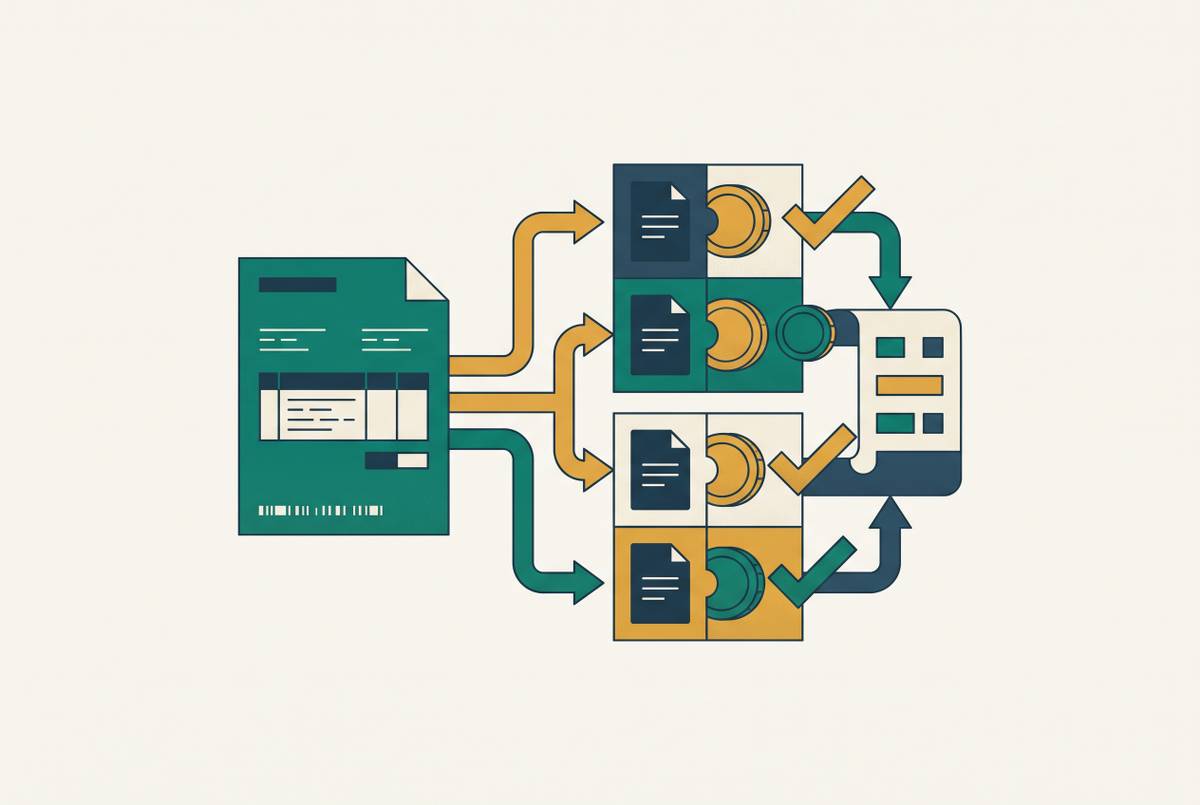
A computer-use agent works the way a human staff member would, reading the screen, clicking buttons, and typing into fields. It moves through the EHR, the payer portal, the clearinghouse, and the billing software the same way a biller does. No API. No integration project. No vendor sign-off from the EHR company.
That's a real departure from older robotic process automation. RPA bots are rules-based and deterministic, fine for routine, unchanging tasks but brittle the moment a payer portal redesigns its login flow or adds a new step. AI agents work probabilistically instead. They make judgment calls, check their own progress, self-correct when something breaks, and hand the task off to a human when they hit something outside their depth. Where an RPA script needs a long, exact sequence of scripted actions to get through a task, an agent often reaches the same result in far fewer steps, because it's reasoning toward the goal instead of following a fixed script.
Agents also get better with use. Early deployments run heavily supervised, with a human checking most decisions, but the agent learns from those corrections and takes on more independently over time. In a denial workflow specifically, the agent logs into the payer portal, reads the remittance data, pulls the denial reason code, grabs the supporting documentation out of the EHR, drafts the appeal, and tracks the resubmission deadline, all without a person manually toggling between four browser tabs. In dental RCM, agents have been deployed to run more than 3,000 claim status checks a day, work that used to take multiple coordinators just to keep pace with. High EHR adoption paired with low interoperability creates exactly the messy environment where screen-operating agents do their best work. They don't need a new API. They just need a portal to look at.
An end-to-end denial workflow handled by agents across EHR and payer portals
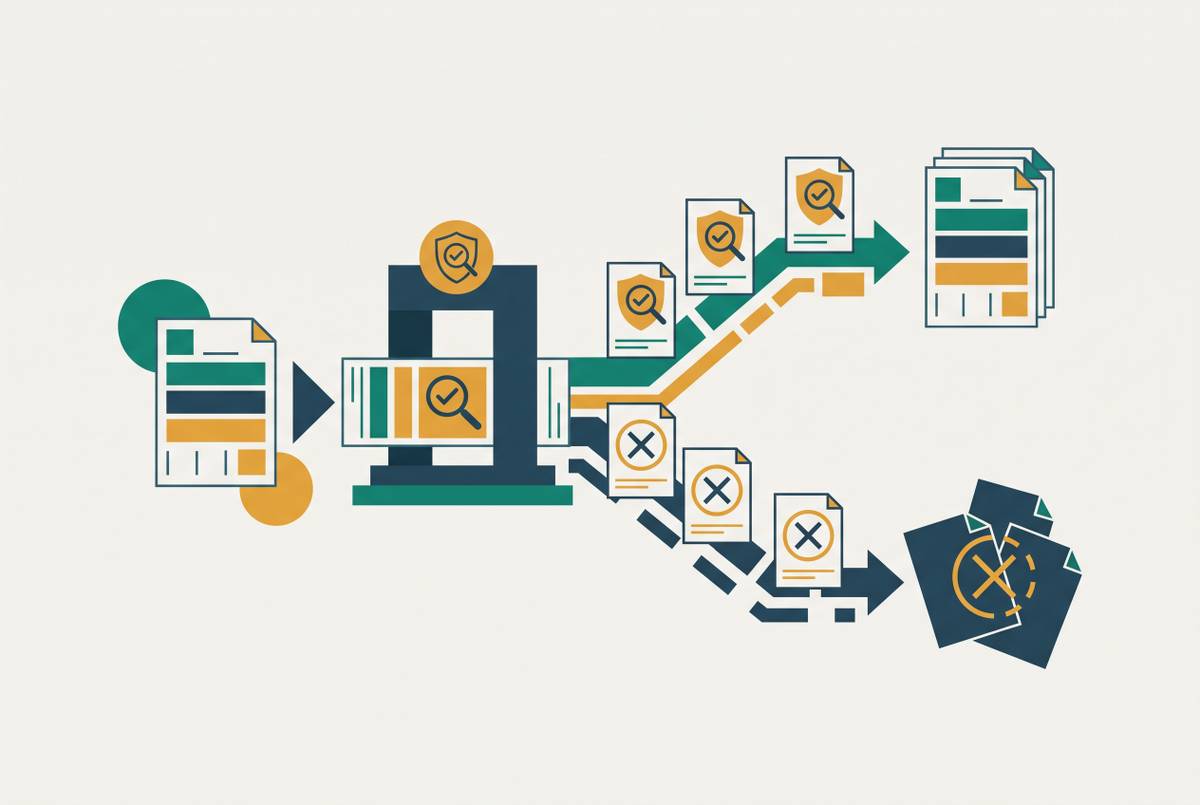
Before a claim even goes out, an agent can check eligibility in real time and flag risky scenarios, like a coverage lapse, before submission instead of after a denial lands. It can check the payer portal for prior authorization status ahead of time instead of discovering it was missing three weeks later. It can scrub the claim against payer-specific coding rules too, catching a missing or invalid modifier before the claim ever leaves the building.
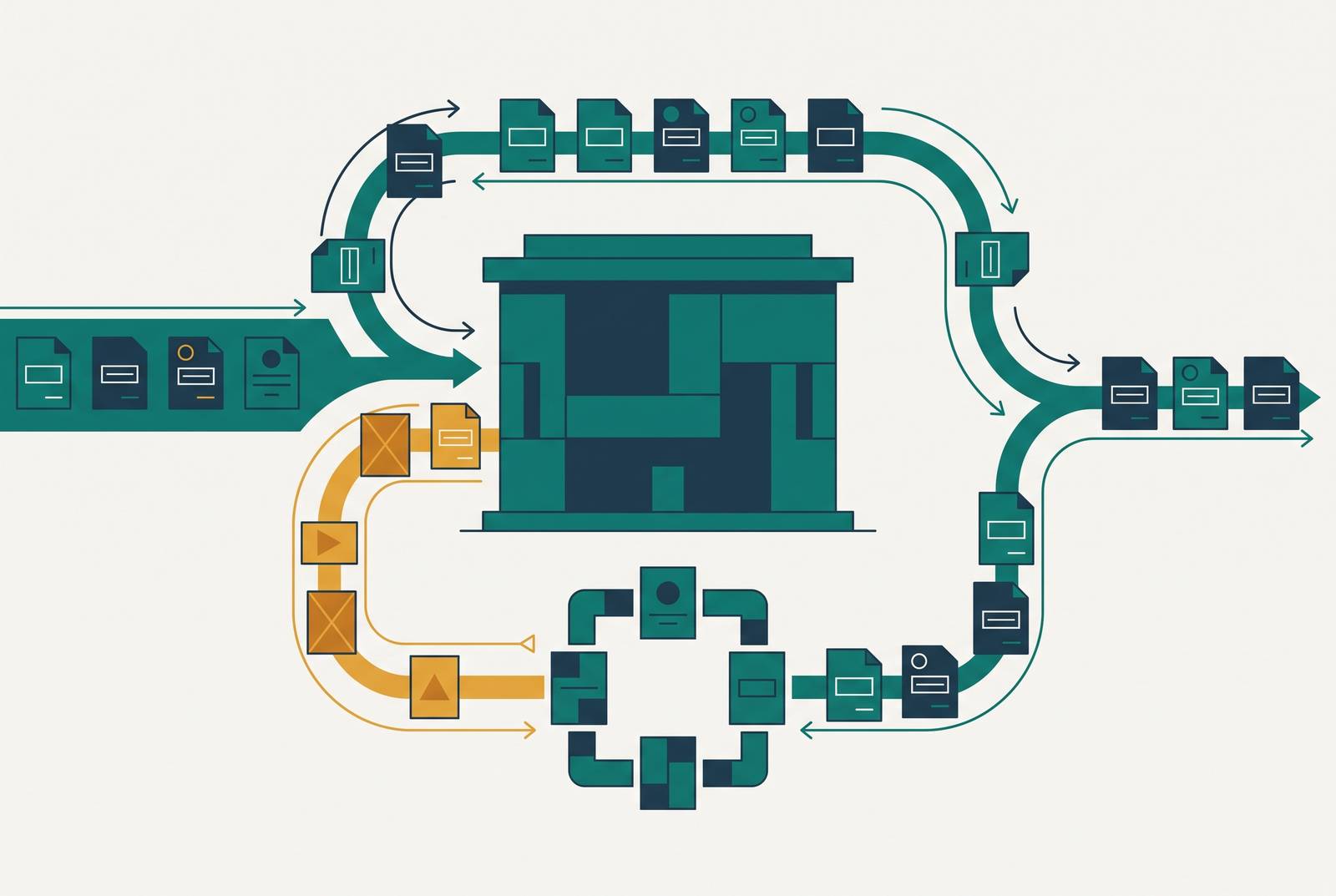
Once the claim is out the door, the same agent shifts into denial management mode. It reads EOBs and remittance data as they arrive, so no one on staff has to manually open and interpret them. It classifies each denial by reason code and groups patterns by payer and code type, surfacing trends in the aggregated data that a person working claim by claim would never catch. It pulls the relevant clinical documentation out of the EHR and drafts an appeal letter using the payer's own template, though a human should still review that draft for compliance before it goes out. It tracks the resubmission window and raises a flag before the timely filing deadline closes. And it checks the payer portal periodically to see where the appeal stands, updating the tracking record and escalating anything that's stalled.
None of that data disappears into a folder somewhere. It feeds a reporting layer automatically: denial frequency by payer, rejection trends by code, rework patterns by provider, all without anyone running a separate manual report at the end of the month. That's the real advantage over automating a single piece of this, like just the appeal letters. The value compounds when the whole cycle runs together, not when one task gets faster in isolation, and that's exactly where most point solutions fall short.
Prior authorization denials and the multi-portal tracking problem agents are best positioned to solve
Prior authorization denials have become a major and expanding category in this entire mess, and the requirements keep growing: more procedures need pre-approval, and documentation standards keep getting more granular. Manual process design is the actual cause here, not payer behavior alone. After a PA request goes in, staff have to periodically log back into the payer portal to check on it, because there's no push notification and no unified view across payers.
Authorization status lives scattered across a dozen different payer portals, and the workaround most practices use is to manually re-enter that status into a separate internal tracking system, which doubles the data entry and doubles the chance for error. Staff working this queue get interrupted constantly, portals vary wildly in how easy they are to use and how fast they respond, and backlogs are common enough that they end up directly delaying patient care. Individual staff performance on these tasks also varies a lot, and just measuring how long a task takes eats up time on its own, which makes any productivity estimate shaky at best.
An agent handles this differently. It logs into each payer portal on a set schedule, reads the authorization status, updates one unified tracking record, and only pulls in a human when a judgment call is actually needed. The manual portal-hopping just goes away. Researchers have projected that AI could meaningfully cut healthcare administrative spending, and flagged prior authorization automation as one of the highest-impact places to apply it. The industry is clearly betting on that projection: in January 2026, R1 launched R1 Prior Authorization, built on Phare Access, the smart patient access hub inside R1's Phare Operating System, specifically to automate prior auth at scale. That's a signal of how much weight this one sub-category is carrying right now.
The limits of computer-use agents in production denial workflows
None of this should be oversold, and the data on this point is blunt. The HealthAdminBench study found that across every agent evaluated, end-to-end task success stayed low: the strongest agent tested completed full administrative tasks successfully only 36.3% of the time, even though its success rate on individual subtasks ran much higher.
That gap matters: an agent can nail each individual step, log in, read the code, pull the document, and still fail to string all of it together reliably across a long, multi-step workflow, especially one involving heav... An agent can nail each individual step, log in, read the code, pull the document, and still fail to string all of it together reliably across a long, multi-step workflow, especially one involving heavy document handling, coordination across several portals, and tracking state over dozens of steps without losing the thread. Production environments add friction that benchmarks don't capture well: MFA prompts, CAPTCHAs, session timeouts, and portal redesigns that break whatever navigation pattern the agent had learned. Long claims with extensive documentation histories also push against the limited context window most agents work within, so the workflow has to be designed carefully to avoid dropping important context halfway through.
Call this a maturation process, not a flip-the-switch replacement, and treat any vendor who implies otherwise with suspicion. Early deployments run with heavy human supervision, and autonomy grows as the agent learns from corrections over time, not on day one. Anyone evaluating a vendor should ask directly which parts of the workflow are genuinely automated end to end and which still need a human in the loop, and should push for clear KPIs set at the start of the engagement rather than a blanket promise of full automation. HFMA makes a similar point: the technology works best paired with actual subject-matter judgment. Predictive AI is good at flagging risk before a denial happens, and generative AI speeds up drafting appeals, but human oversight still matters for the clinical, contractual, and strategic calls that don't reduce to a pattern match.
The denial management software market in 2026: platforms and positioning
The market itself is growing fast. Fortune Business Insights projects the denials management software market roughly tripling from 2026 to 2034, a compound annual growth rate of 14.69%. RCM-integrated solutions have been a dominant segment of this market, largely because a single connected system makes root-cause analysis a lot easier than piecing it together across separate tools.
The vendors in that market split into a few clear categories, and the line that actually matters is how much integration each one requires before it can function. Aptarro pairs ClaimStaker, a clinical claim scrubbing tool that checks claims against a constantly updated library of payer-specific and regulatory edits before submission, with a workflow engine that handles denial tracking, reporting, and workflow management built to scale from small practices up to large health systems. DataRovers built Denials 360 specifically as a denial management product rather than a bolt-on module, covering the full lifecycle from discovery to resolution, including automated appeals, smart queue prioritization, underpayment detection, and productivity tracking. Optum's A/R Recovery and Denial Management offering takes a different shape entirely: it's a managed service, embedding recovery specialists directly into a practice's existing workflow and backing them with analytics and automation rather than shipping a standalone piece of software. EvidenceCare is positioned toward hospitals that need denial prevention built into admission and documentation decisions at the clinical workflow level. RapidClaims takes the opposite approach from the agent model described throughout this piece: it's natively integrated with a range of major EHR platforms across multiple specialties. Its value depends entirely on that integration existing and holding up over time. Aptarro's January 2026 top-ten list rounds out the category with NextGen Healthcare, FinThrive, Veradigm, Athenahealth, AdvancedMD, Tebra, CollaborateMD, and CureMD, all EHR-integrated modules or enterprise RCM suites built on the same assumption.
Computer-use agent platforms sit apart from every name on that list, and that's the whole point of this category. They don't need the native integration RapidClaims is built around, and they don't need an embedded managed-services model. They operate across whatever billing environment already exists, EHR, practice management system, payer portal, without a single API connection, which makes them the one category here that's genuinely agnostic to what a practice already runs. For a practice that can't or won't touch its existing billing stack but still wants a denial workflow that runs start to finish across the EHR and every payer portal it touches, this is the category built to solve exactly that constraint.