Accounts Receivable Aging Cleanup in Medical Billing
Clearing old claims requires fixing the workflows that created them in the first place.

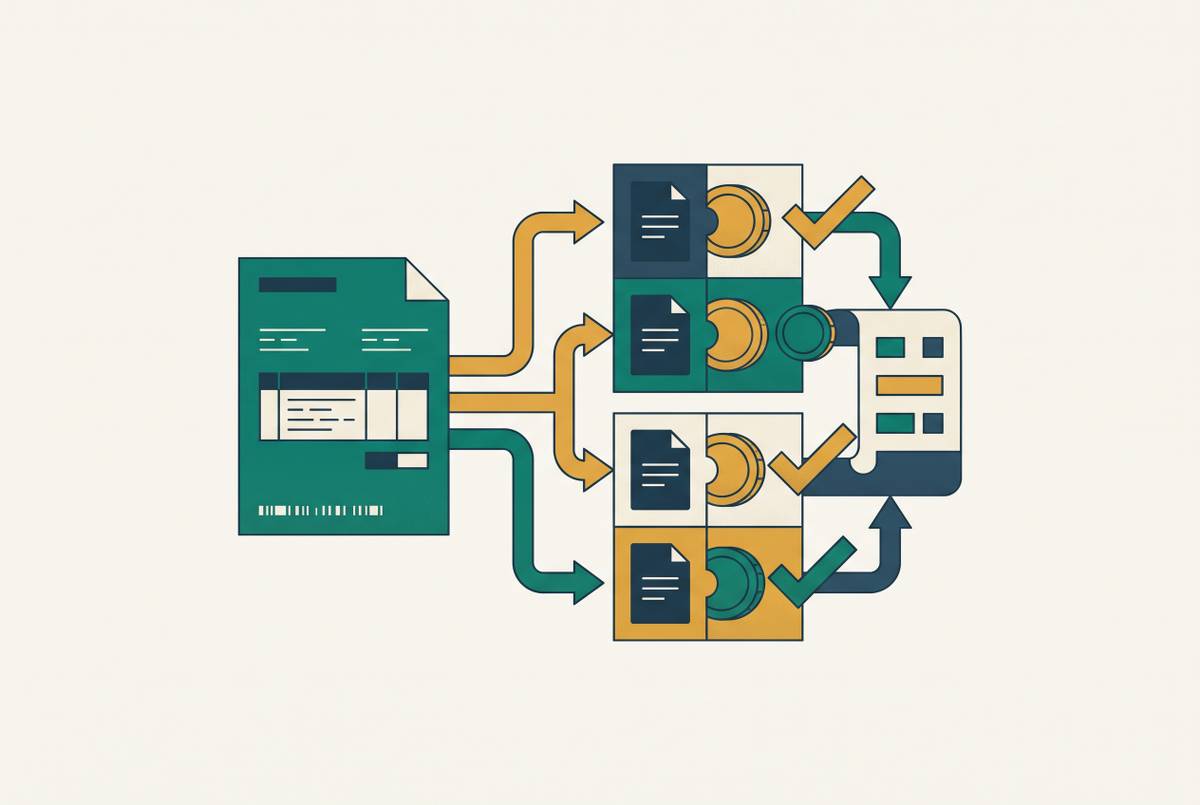
AR aging cleanup follows a sequence: triage by collectability, audit timely filing windows, work the denial queue, appeal what's appealable, then write off what's genuinely dead. Practices that skip steps or run them out of order end up writing off dollars they could still have collected, because by the time a claim is in the 120-day bucket, the decision window has already closed on most of it. The rest of this piece walks through that sequence in order, and the reason for the order, because the order is the whole point.
What healthy AR benchmarks look like, and how far most practices are from them
MGMA's 2024 DataDive benchmarks give physician practices a clear target: days in AR between 30 and 45, with anything above 55 signaling a workflow problem rather than a temporary backlog. AR older than 90 days should stay under 20% of the total. Net collection percentage should be around 97%, and denial rates should stay below 5%. On the aging distribution itself, a healthy practice holds 50 to 60% of its AR in the 0-30 day bucket, 15 to 20% in 31-60 days, and 10 to 15% in 61-90 days. Cross 20% in the 90-plus bucket and the diagnosis changes: that's not a collections lag anymore, that's a billing system that isn't functioning.
Most practices are nowhere close. HFMA and Kodiak Solutions data put initial denial rates near 12% in 2024, well above the 5% benchmark. Experian Health's 2025 State of Claims survey found 41% of providers now report denial rates above 10%, up from 30% just three years earlier. That gap between the benchmark and the reality is the actual dollar figure that a cleanup effort is trying to close. It's also the exit criteria: a cleanup engagement isn't finished when the backlog is cleared, it's finished when the practice can sustain those MGMA numbers on its own, month after month, without a rescue effort every eighteen months.
The root causes that created the backlog, because cleanup without diagnosis just repeats the cycle
Three things drive most of the backlog, and none of them are follow-up failures. They're upstream failures that appear downstream as aging dollars.
Claim submission errors sit at the top. CMS MAC denial data consistently shows that missing or incorrect information, wrong modifiers, incomplete documentation, bundling errors, is the leading cause of first-pass denials. Each one of those denials adds 15 to 30 days to the AR clock automatically, before anyone even starts working the claim. Experian Health's 2025 findings back this up from the provider side: half of respondents named missing or inaccurate claim data as the primary cause of denials, and 32% pointed to incomplete patient registration data at intake. Fifty-four percent said claim errors are getting worse, and 68% said clean claims are harder to submit than they were a year earlier. The mechanical difference matters here too: manual billing workflows tend to produce substantially higher first-pass denial rates than practices using automated clean-claim scrubbing before submission.
The second root cause is contract misalignment, quieter than coding errors but just as expensive. A practice billing against a fee schedule that doesn't match its actual contracted rates will accept underpayments without ever knowing to challenge them. The CY 2026 Physician Fee Schedule illustrates how fast this can drift: for the first time, CMS implemented two separate conversion factors as required by statute, $33.57 for qualifying APM participants and $33.40 for everyone else. A practice that hasn't updated its fee schedule crosswalk to reflect that split is now generating underpayment data that's simply wrong, and every underpayment nobody catches becomes a write-off by default, not by decision.
Third, and probably the most corrosive over time, is the absence of a systematic denial follow-up workflow. Denials that don't have a defined appeal cadence don't get contested, they just age out past their windows. Industry data shows 43% of providers report being understaffed, which explains a lot: billing teams under those conditions are reacting to whatever's loudest that day, not managing a queue with any real structure. Timely filing windows vary substantially by payer, Medicare gives 12 months, Medicaid ranges from 90 days to 12 months depending on the state, and most commercial payers set something between 90 and 365 days, with the actual contract controlling regardless of what the payer's published policy says. And secondary billing gets missed constantly. When a primary payer denies or underpays, the secondary payer is frequently still billable, but almost no one goes back to check that on claims that are already aging.
Skip the diagnosis and none of this actually changes. A cleanup that clears the backlog without mapping these three causes back to specific workflows just resets the clock. The same claims will be back in the 90-day bucket within a year.
Step 1: Triage the aging report by collectability, not just by dollar value
Start with a full AR aging report, segmented by payer, provider, and CPT code bucket. Break it into the standard aging categories, 30-60 days, 61-90, 91-120, and 120-plus, and get a dollar figure attached to each one before deciding what to work first.
The instinct to chase the largest balances first is understandable and wrong. Triage by collectability instead. The 91-120 day bucket deserves the most urgent attention: collection probability is still reasonable there, but the clock is running out, and every day of delay pushes claims closer to the 120-day threshold where industry data shows collection odds can fall below 50% for most payer types. Claims that still have active appeal rights get immediate priority too, since missing an appeal deadline doesn't just make collection harder, it eliminates it permanently. Medicare and the larger commercial carriers generally collect better than smaller regional payers, so escalation effort should weight toward them accordingly. Even in the worst bucket, 120-plus days, proper segmentation and payer escalation by an AR management operation can still recover something meaningful, often in the 40 to 65% range depending on specialty and how the balances are distributed across payers.
Triage is also where the correctable errors become visible. Denial codes like CO-16 and CO-27 mean the payer would have paid if the submitted information had been right, so those claims jump to the front of the line, ahead of claims with larger balances but harder root causes. On the other end, triage is where claims exit the recovery pipeline entirely: anything past timely filing with no appeal rights and no secondary payer available gets flagged for write-off now, not six weeks from now after someone's worked it for nothing.
While the aging report is open, check for the quieter problems too: unapplied payments sitting in suspense accounts, duplicate billing entries, balances parked in "pending" with no follow-up date ever assigned to them. Suspense account reconciliation alone routinely finds real, previously collected revenue for mid-sized specialty practices, money that came in the door and never got applied to the account it belonged to.
Step 2: Timely filing audit, identifying which claims still have a recovery window
Timely filing isn't a general policy to know off the top of your head. It's claim-specific, governed by the contract with that particular payer, not by whatever the payer publishes as general guidance. Medicare gives 12 months from date of service. Medicaid ranges anywhere from 90 days to 12 months depending on the state. Most commercial payers fall somewhere between 90 and 180 days, but the actual contract language is the only thing that controls.
For every claim in the 60-120 day range, calculate the exact number of days left in that filing window. Not a rough estimate, the exact number, because missing the deadline by a single day voids the claim completely, permanently, with no exceptions. That math should reorder the work queue: a claim approaching its filing deadline jumps ahead of a higher-dollar claim that still has months of runway left, because urgency beats balance size at this stage of the process.
The same audit is where secondary billing opportunities usually appear, and they're routinely missed. If the primary payer denied or underpaid and the secondary payer's window is still open, that's billable revenue sitting untouched, and most practices never go back to check for it on claims that have already aged past 60 days.
Two coding-and-payment changes belong in this audit specifically. The CY 2026 conversion factor split ($33.57 and $33.40, described above) means any fee schedule crosswalk that hasn't been updated is producing bad underpayment data, and shortfalls from that miscalculation can get misclassified as expected contractual adjustments instead of disputes to pursue. Separately, NCCI bundling rules are updated periodically and can introduce new restrictions on E&M codes alongside certain procedure codes. Claims denied for bundling reasons are worth re-examining against the edit version in effect at the time of service.
By the end of this step, every claim in the queue should fall into one of three groups: still within its filing window, eligible for a secondary billing opportunity, or past every window that applies. Only the last group moves to write-off analysis. Nothing skips ahead.
Step 3: Payer follow-up, working the denial queue before appeal deadlines close
Sort denials by root cause first, not by payer. A coding-based denial needs a different workflow than an eligibility problem or an authorization gap, and lumping them together by payer name obscures which fix actually applies.
Correctable-error denials, the CO-16s and CO-27s and their relatives, get worked first, because the payer was ready to pay and just needs corrected data resubmitted. For every other denied claim, pull the remittance advice, read the denial code, and figure out the corrective action before picking up the phone or logging into a payer portal. That sequencing matters: contacting a payer without knowing the fix wastes the contact.
None of this holds together without a defined follow-up cadence, something like a 7-day, 17-day, 30-day check-in structure. Without it, billing staff are reacting to whatever the queue reveals at that moment, and the filing window keeps closing faster than anyone notices. Running quarterly payer variance reviews in parallel is also worth the time: comparing what was actually paid against the contracted rate, payer by payer, reveals underpayment patterns that individual claim review misses entirely.
Set escalation triggers explicitly. If a payer hasn't responded within the defined follow-up window, the claim escalates to a supervisor or a peer-to-peer review request, and that escalation gets logged, not just remembered. Secondary billing belongs here too: for any claim where the primary denied or underpaid and a secondary payer was active at time of service, bill the secondary before its own filing window closes. This is the step most consistently skipped on aged claims, and it represents real, recoverable revenue sitting untouched.
Every payer contact, every response, every next action needs a written record. That log isn't paperwork for its own sake, it's the evidence base the appeal step depends on. And at current staffing levels, with a reported 43% of providers understaffed, payer follow-up is the step most likely to stall out entirely without dedicated capacity or some form of automated support carrying part of the load.
Step 4: Denial reworking and appeals, building the case payers will actually pay
Not every denial needs a formal appeal, and treating them all the same wastes effort. Correctable claims just need a resubmission with fixed data, no appeal required. Medical necessity denials need clinical documentation behind them, medical records, physician notes, proof of prior authorization where it applies. Authorization-based denials sometimes qualify for a retroactive authorization request, backed by documentation of clinical urgency. Timely filing denials only deserve an appeal if there's actual proof the claim was filed on time; absent that proof, it's a write-off candidate, not an appeal.
Appeals succeed or fail based on how closely they match the specific denial reason and the specific payer's known behavior. A generic appeal letter, the kind that could apply to any denial from any payer, is close to guaranteed to come back denied a second time. Every appeal needs its own documentation pulled together first: medical records, authorization paperwork, prior payer correspondence, the remittance advice itself.
This step is also where coding audits earn their keep. If a denial traces back to a coding error, check whether that same error is quietly affecting current claims too, not just the aged one in front of you, and flag it for root cause reporting rather than treating it as a one-off. When several denied claims from the same payer share the same denial reason, a single escalation or peer-to-peer conversation can often resolve the whole batch at once, instead of appealing each claim individually.
AI-assisted denial management has moved from pilot projects into production at scale. Auto-generated appeals, built around payer behavior patterns and clinical logic, have emerged as an active use case in AI-driven revenue cycle work. Black Book Research's 2025 findings put a number on the effect: 83% of healthcare organizations reported that AI-driven automation cut claim denials by at least 10% within six months of deployment, and the more mature deployments reached 30 to 40% reductions. Computer-use agents extend this further, operating payer portals the way a staff member would, reading screens, entering data, filing the appeal, at a volume and speed an understaffed billing team simply can't match manually, and without needing an API integration or a change on the payer's end.
The urgency driving all of this produces effects that are not abstract. Net revenue leakage from denials grew 25% year-over-year in 2025, partly because payers are running their own AI systems to generate denials faster than human billing staff can respond to them. Matching that speed on the provider side isn't optional anymore, it's the baseline cost of keeping up.
Step 5: Write-off decisions, what to close and how to document it
A write-off should be the last stop for a claim that's already been triaged, checked against its filing window, and run through every appeal option available to it, not the place a claim ends up because nobody worked it. Treating write-off as a default instead of a decision is exactly how revenue that was still recoverable gets erased on paper.
Three categories, and they need to stay separate in the reporting. Contractual adjustments, the gap between the billed charge and the contracted rate, aren't a loss at all, they're an expected part of the payer relationship, but they need to post correctly or they'll distort the net collection percentage the whole practice is measured against. Timely filing write-offs are genuine losses: claims that ran out the clock on every filing and appeal window available. Each one needs the reason and the date documented, and each one should get flagged for root cause reporting, because a cluster of these in one payer or one CPT bucket is telling you something about an upstream process, not just about that claim. Bad debt, meaning patient balances where every follow-up avenue has been exhausted, needs to sit in its own category, separate from insurance write-offs, or the reporting stops meaning anything.
Write-off authority shouldn't rest with whoever happens to be closing out the account that day. It needs a documented approval threshold, tied to dollar amount, with sign-off required above it. That matters for a reason beyond internal control: the OIG's 2024-2025 Work Plan names improper payment recovery from Medicare and Medicaid as an active priority, which means payers and auditors are actively looking for gaps in documentation. A write-off that can't be defended on paper, months after the fact, is exactly the kind of gap that turns into an audit finding.
Read the write-off patterns themselves as data, not just as closed accounts. A concentration of timely filing write-offs tied to one payer, or one CPT code family, points directly back to a specific failure earlier in the process, whether that's a coding habit, a follow-up cadence that's too slow for that payer's window, or a fee schedule crosswalk nobody updated. The write-off is the end of the claim's life. It shouldn't be the end of the conversation about why it got there.