Referral Intake Automation in Practice Management Systems
Automating referral intake end-to-end prevents patients from falling through coordination gaps.
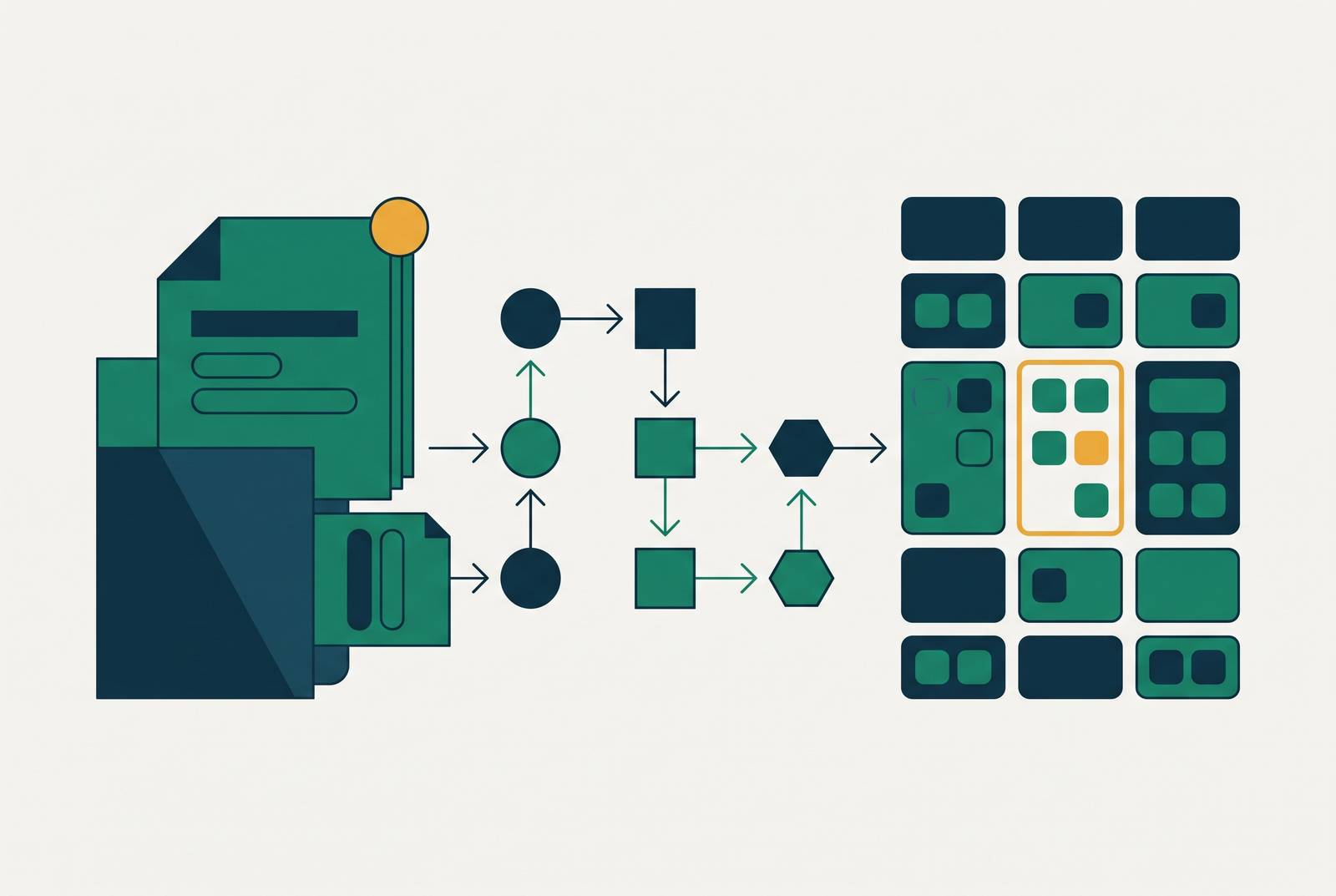
A fax arrives at the front desk. It is six pages, the demographics are on page one, the insurance card is a photocopy on page four, and the referring physician's reason for the visit is handwritten in the margin of page two. A staff member has to read it, type the patient's information into the practice management system, check whether this person has been seen before, check whether the coverage listed is active, check whether the requested service needs prior authorization, call the referring office for the chart notes nobody included, register the patient, find an open slot, call the patient, and then, if the office remembers, let the referring provider know the loop closed. That sequence is not slow because any one task is hard. It fails because fax, EHR, payer portal, and patient outreach each belong to a different system, and no single system owns the entire chain. Every handoff between those systems is a seam, and seams are where referrals get dropped.
Most practice management systems and EHR-native referral modules, including the ones built into Epic, athenahealth, and Cerner, handle the tracking half of this problem well. They show a coordinator where a referral sits in a queue. What they do not do is perform the outreach, submit the prior authorization, or chase down the missing documentation, and that gap keeps significant coordinator headcount necessary no matter how good the tracking dashboard looks. A practice can have a perfectly organized referral list and still lose a third of those patients before they are ever scheduled, because the list only tells staff what needs to happen, not who is going to do it.
Compounding the problem is the fact that referrals do not arrive through one door. A tool built to automate only the fax queue, or only the portal, addresses one slice of inbound volume and leaves the rest exactly as manual as before. Practices often assume their EHR's built-in referral module already solves this, since it is integrated and familiar, but that module typically stops at tracking and leaves the actual coordination labor, the outreach calls, the prior auth submissions, the record chasing, sitting on staff desks regardless of how well it displays referral status. The pipeline fails not at one weak link but at its foundation, because it was never built as a single pipeline.
The complete referral intake chain, stage by stage
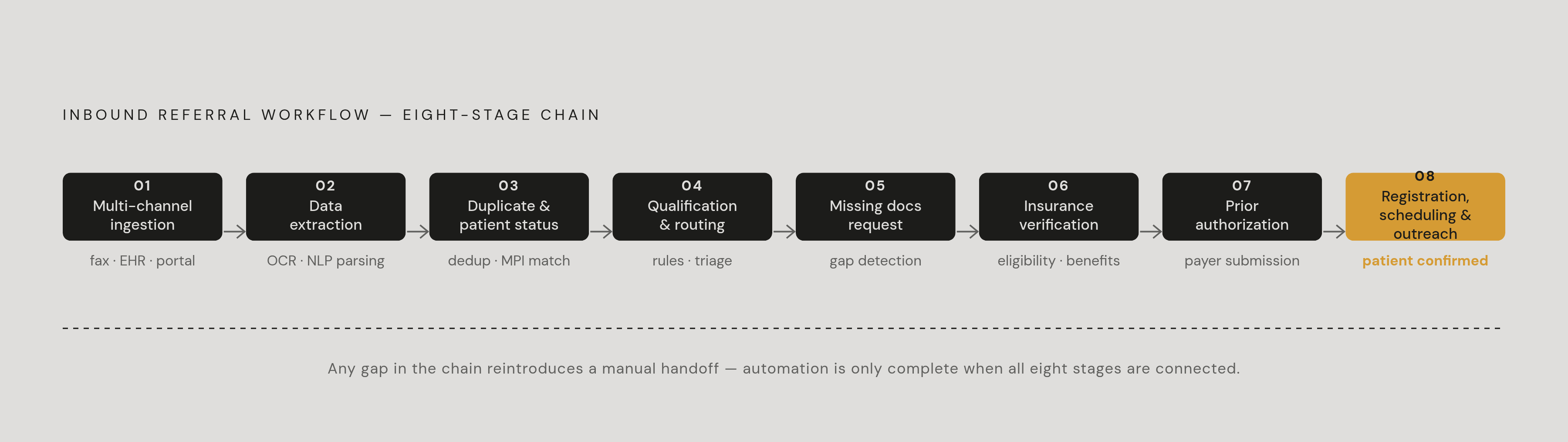
To see why partial fixes underdeliver, you have to lay out the full chain: a complete inbound referral workflow runs through at least eight distinct stages, and automating any single one in isolation does not relieve staff labor or stop leakage. The benefit comes only from connecting all of them end to end. The first stage is multi-channel ingestion: receiving the referral regardless of whether it came by fax, patient portal, phone, email, or direct EHR exchange, and landing it in one intake queue rather than several separate inboxes. The second stage is data extraction, where the referral packet gets read and its contents, patient demographics, insurance information, the referring provider's identity, and the reason for referral, get captured without a staff member retyping any of it. The third stage is a duplicate check paired with a determination of patient status, confirming whether the person already exists in the EHR and whether this is a new or returning patient before any registration work begins. The fourth stage is referral qualification and content-based routing, in which the referral is weighed against the practice's acceptance criteria and sent onward based on diagnosis, requested service, geography, and payer, not based on which fax line happened to receive it.
The fifth stage finds what documentation is missing and requests it from the referring office, so the gap that so often stalls a referral indefinitely finally closes. The sixth stage is insurance verification: it confirms active coverage, copay and deductible status, and whether the requested service needs prior authorization before anyone books an appointment. The seventh stage is prior authorization itself: pulling clinical documentation from the EHR, matching it against payer-specific criteria, assembling and submitting the authorization packet, tracking its status, and following up, including retrieving and resubmitting additional documentation if a payer asks for it. The eighth and final stage is patient registration, scheduling, and outreach, registering the patient in the EHR, booking the appointment, and contacting the patient to confirm it.
Honey Health's 2026 guide names this sequence explicitly, and it separates tools that track these stages from tools that perform them; that distinction decides how much of this labor actually leaves a staff member's plate, versus how much just becomes more visible on a dashboard. If any one of these eight stages is skipped in an automation build, a manual handoff reappears exactly where the gap sits, because the chain is only as complete as its weakest stage.
Fax ingestion and AI data extraction at the front of the pipeline
Stages one and two, ingestion and extraction, matter disproportionately because every later stage depends on structured data existing before it can begin. An unstructured fax that still requires a human to read it line by line blocks the rest of the chain from running on its own, no matter how sophisticated the downstream automation is. A large share of referrals still arrive by fax, so the strongest automation in this space has to start by ingesting faxed packets and extracting structured data from them automatically, instead of asking staff to retype demographics and insurance details from a scanned page.
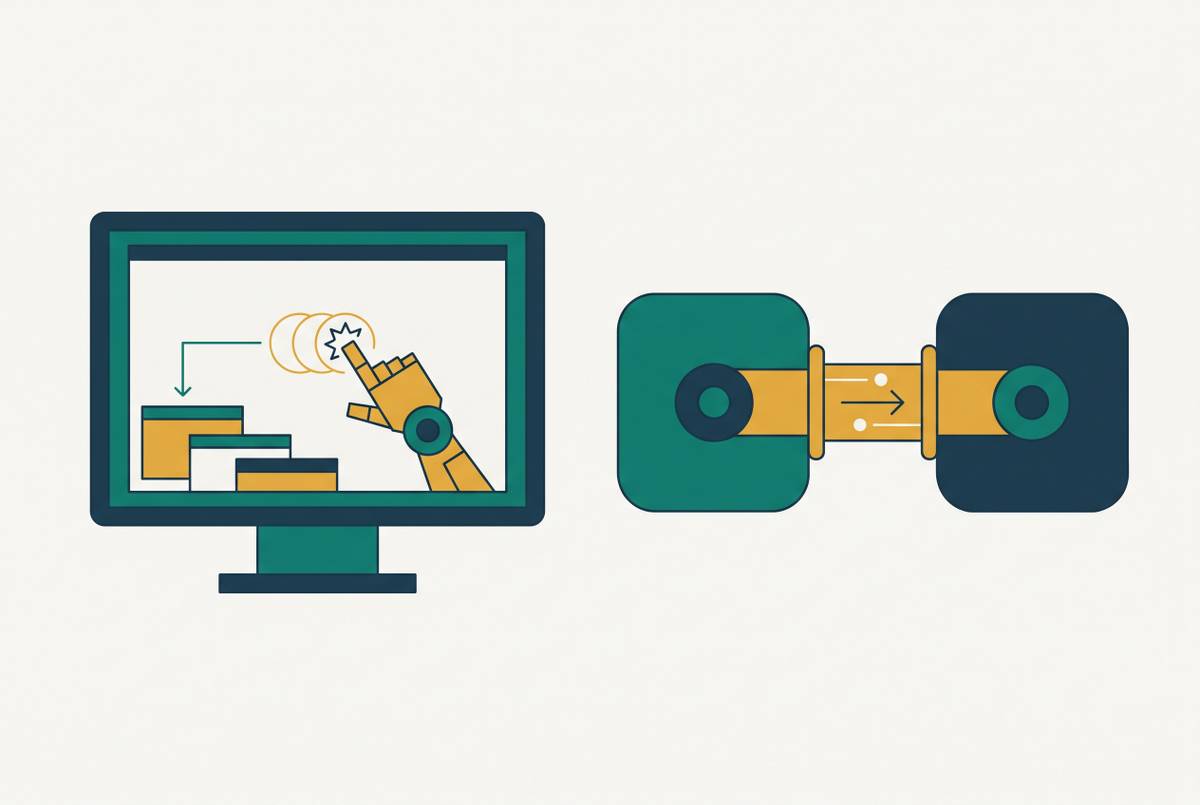
What makes this technically viable now, where it was not a few years ago, is the shift from rule-based robotic process automation to agentic AI. Rules-based RPA just repeats a fixed sequence of screen steps, and it breaks the moment it hits a document it was not scripted for, because it cannot read unstructured records. Agentic AI reads the record, reasons about what it contains, and acts on it: it resolves ordinary exceptions on its own and escalates only the genuinely ambiguous ones to a staff member, so nothing fails silently. Platforms such as Novoflow, a Y Combinator-backed healthcare operations company whose screen-operating agents work across a practice's EHR, payer portals, and third-party systems the way a trained staff member would, are built around this model rather than around fixed API integrations. The infrastructure behind this capability includes vision-based systems like OpenAI's Computer-Using Agent, which interprets raw screenshots, and Anthropic's work enabling Claude to interact with computer interfaces through defined tools and an agentic loop, both of which represent the class of technology that makes document-reading agents workable in a clinical setting.
Once the data is extracted, the agent does not just hand it to registration. It checks the extracted patient against the EHR for duplicates and for new-versus-returning status first, which prevents the downstream rework that happens when a returning patient gets registered as a brand-new one, a mistake that ripples into billing and chart continuity. Fax ingestion and extraction, then, work as the gate the entire pipeline has to pass through. If you get this stage wrong, every later stage inherits bad or incomplete data.
Insurance verification and prior authorization as the bottleneck inside the bottleneck
Prior authorization consumes the most time in the referral intake chain and carries the most direct financial consequence, and incomplete automation is most visible at this stage. An agentic prior auth system pulls the relevant clinical documentation straight from the EHR, matches it against payer-specific coverage criteria, assembles and submits the authorization packet through the payer portal, tracks its status, and manages follow-up. When a payer comes back asking for more documentation, the agent retrieves it and resubmits without a staff member coordinating any of it by hand.
The scale of the burden this replaces is substantial. A national physician association reports that clinicians complete roughly 39 prior authorizations per week on average, and the hours spent on that process come directly out of time that would otherwise go to patients or to revenue-generating work. Two cases illustrate what automating this stage looks like in practice. Allegheny Health Network partnered with Humata Health to deploy AI-driven prior authorization automation, and the system now processes a large volume of authorizations annually with a high first-pass approval rate. Thoughtful AI's PAULA agent reports a similarly high first-pass resolution rate, so most of its authorizations clear with no human intervention or appeal.
The regulatory environment is moving in the same direction. Several dozen insurers pledged in June 2025 to issue at least 80 percent of prior authorization approvals in real time by 2027, and AI is the main mechanism payers are deploying to meet that commitment at scale. TactionSoft's 2026 prior auth build guide describes a high-volume hospital that cut its PA processing time substantially: it recovered a significant amount of staff time annually and captured additional revenue through better approval and denial-overturn rates. Because a meaningful share of prior authorizations are still conducted entirely over the phone rather than through payer APIs, voice AI agents have emerged to cover that specific gap, placing the calls, navigating hold times and phone menus, and conducting the conversation with a payer representative without a staff member on the line.
Scheduling and patient outreach as the conversion point where leakage is measured
An approved prior authorization does not guarantee a booked visit. The patient still has to be reached, offered appointment options, confirmed, and reminded, and each of those touchpoints is a place where the referral can drop off if it depends on a coordinator finding time to make the call. This is the stage where the abstract idea of referral leakage turns into a number a practice can actually watch. Linear Health reports converting up to 80 percent of referrals into booked appointments through automated patient outreach, a figure that marks the distance between a tool that only tracks referral status and one that actively moves patients onto the schedule.
Automated outreach works across SMS, email, and phone, following a defined contact cadence without consuming staff hours, and the same agent that books an appointment can confirm it and backfill the slot if the patient cancels. The sequence does not end once the patient is on the calendar. Closed-loop notification, confirming back to the referring provider that their patient was in fact scheduled, is the stage manual workflows skip most often, and automating it strengthens the relationship with referring offices, making a practice the destination those offices send their next patient to as well.
For a multi-location group, this is where the value of the whole chain becomes measurable at the leadership level. Referral conversion rate and leakage are the group-level metrics that translate intake automation into something an executive team can act on, because a practice that cannot measure its own conversion rate has no way of knowing where in the chain it is losing patients. That measurement problem, scaled across dozens of locations, is what makes centralized intake architecture a necessity rather than a convenience.
MSO and multi-location intake architecture
A single practice can bolt automation onto its existing workflow one stage at a time. A multi-location group or a private-equity-backed MSO cannot simply copy that approach across every clinic it owns, because what it needs instead is a centralized ingestion and routing layer that writes back into several different EHR environments at once and surfaces exceptions through one shared queue rather than dozens of local ones. Acquired practices inside an MSO rarely run the same systems. Some operate on athenahealth, some on Epic, some on eClinicalWorks, some on NextGen, and some are still running legacy on-premises software, so the intake platform has to write structured scheduling tasks back into whichever system each clinic already uses.
Where direct EHR integrations do not exist, such as legacy on-prem systems, Honey Health uses desktop automation as a bridge, which reintroduces some fragility but is preferable to leaving those clinics outside the intake workflow entirely. That bridge reintroduces some fragility compared to a native integration, but it keeps those clinics inside the automated workflow rather than leaving them stranded on manual processes while the rest of the network moves forward.
Routing at the network level has to work by content rather than by channel, directing each referral according to diagnosis, requested service, geography, and payer rather than by which fax line happened to receive it, since that is the only routing logic that holds up across a portfolio with a mixed specialty base. A shared exception queue replaces the old pattern of per-clinic coordinator silos: when an agent cannot resolve something on its own, that escalation surfaces in one central place instead of disappearing into a single clinic's inbox. Group-level analytics on referral volume, conversion, and leakage, visible by default across the whole portfolio, give MSO leadership the information needed to identify which locations or specialties are underperforming and intervene directly.
Honey Health's own comparison of MSO vendors sets out four inclusion criteria that a centralized intake platform has to meet: multi-channel ingestion across the entire network, content-based routing across specialties and locations, native integration with multiple EHRs, and HIPAA-compliant operation with BAA readiness, and a vendor that meets fewer than all four is not suitable for a multi-EHR MSO environment. Built this way, the referral intake agent becomes the entry point into the rest of the back-office automation suite. If a referral triggers a prior authorization requirement, it routes straight into the prior authorization workflow, and an eligibility gap appears directly in the eligibility and benefits queue, because the intake hub and the downstream agents are the same underlying system.
Referral intake software: tracking versus doing
Set against this full chain, the most important distinction among referral intake tools in 2026 is not feature breadth but how much of the actual work a tool performs versus how much it simply tracks and leaves for staff to complete. EHR-native referral modules sit on the tracking end of that spectrum. They integrate cleanly with the record system they were built for, and they give coordinators a clear view of where each referral sits, but they stop short of performing the outreach, the prior authorization submission, or the documentation chase that those referrals still require.
Point solutions that automate a single stage, a fax-extraction tool, or a scheduling-only outreach product, move further along the spectrum but still leave the rest of the chain manual, since automating any one stage in isolation does not relieve the labor or prevent leakage, as the value comes from connecting them. The tools furthest along the doing end of the spectrum are the ones built around the full sequence: ingestion, extraction, duplicate and status checks, qualification and routing, record chasing, insurance verification, prior authorization, and scheduling with outreach, connected as a single system rather than stitched together from separate products. For a single practice, that distinction determines how much coordinator time a tool actually frees up. For an MSO running a heterogeneous mix of EHRs across dozens of locations, it shows leadership, in one place, where referrals are being lost and why.