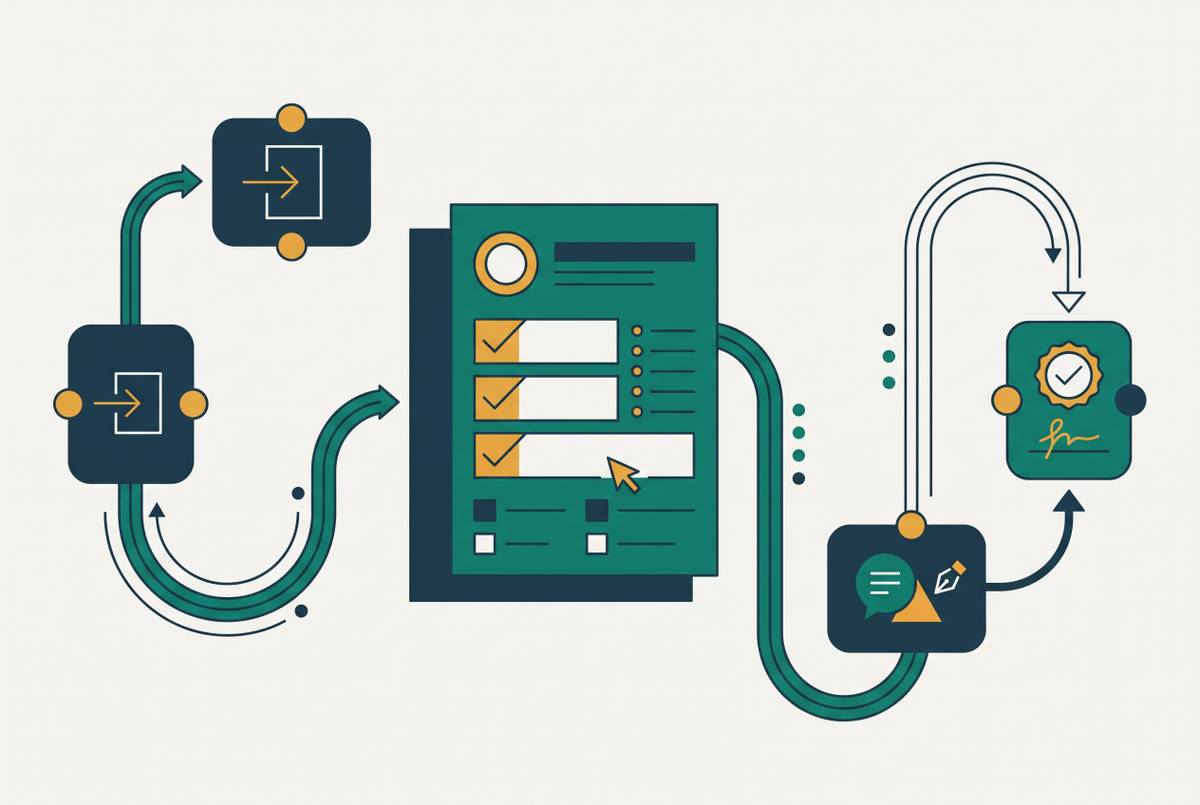
Automated Appointment Reminders in athenahealth
Three channels reach different patients at different times to stop no-shows before they happen.
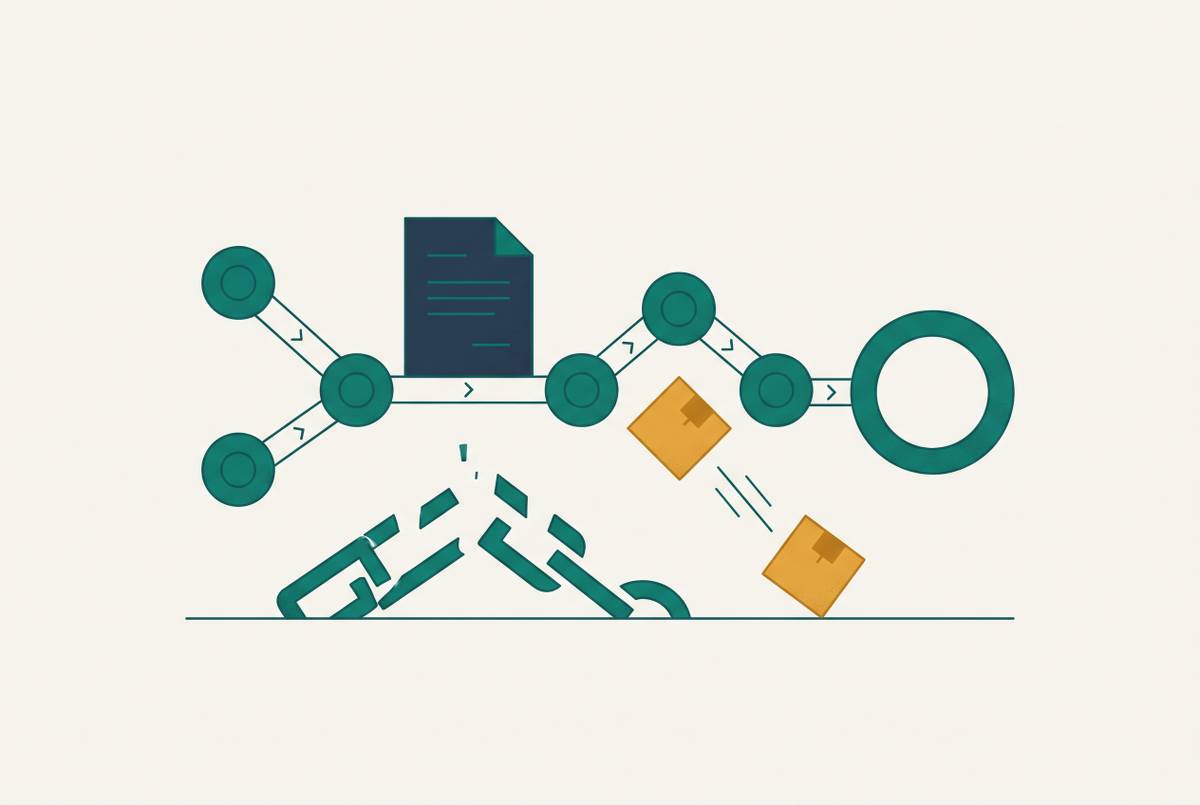
A no-show costs more than an empty slot. It costs the provider's time, the front-desk labor already spent confirming a visit that never happened, and the patient's own shot at care on schedule. athenahealth's native reminder system solves the easy version of this problem: patients who simply forget. Everything downstream of the reminder gets far less attention than it deserves. Most practices treat the reminder as the finish line, when it's really just the first domino in a longer chain that the software doesn't finish knocking over.
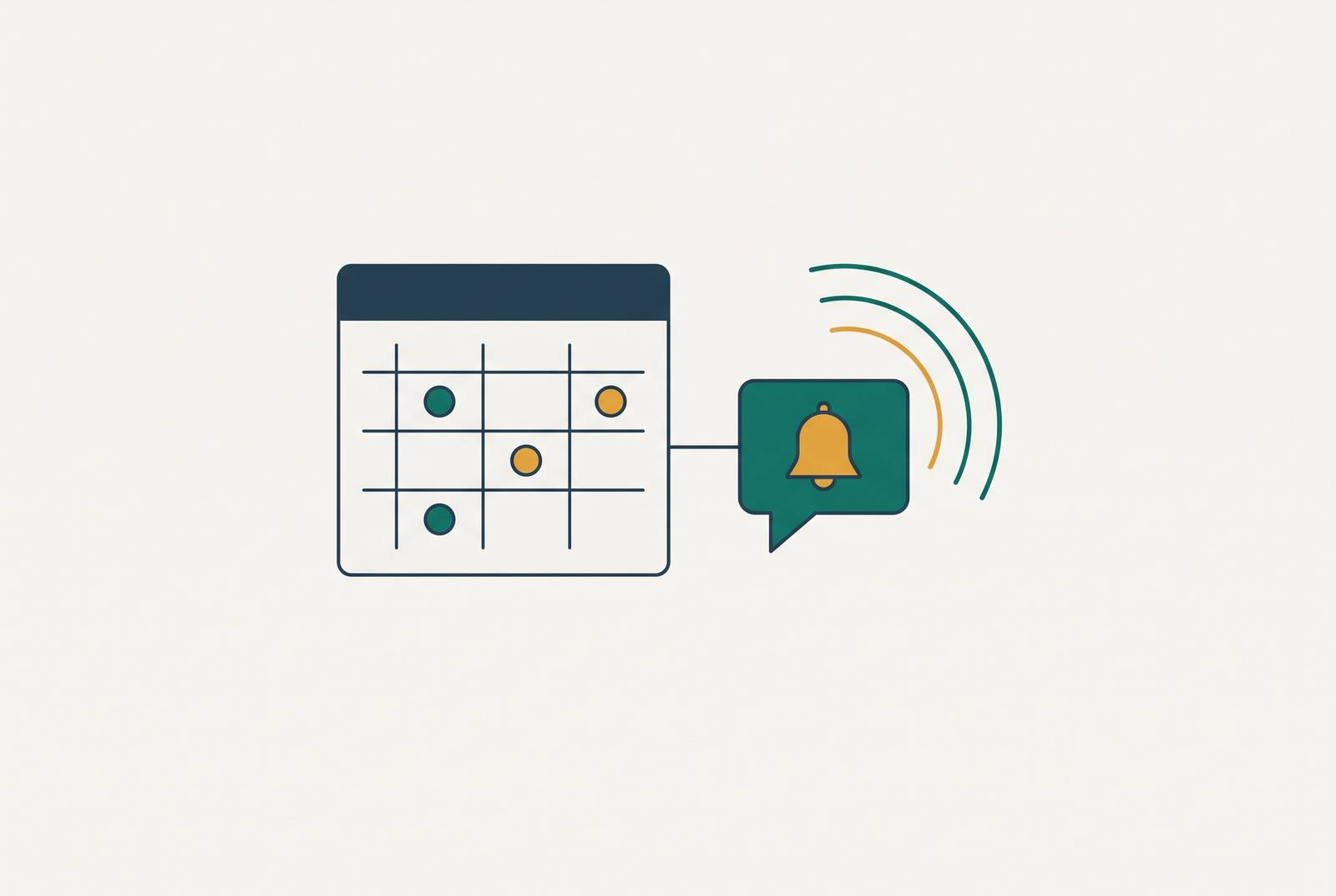
athenaOne's three built-in channels work differently by design. SMS reaches patients within minutes and is the highest-response option for same-day confirmations. Email suits anything that needs to exist in writing, such as pre-visit instructions or portal-dependent content a patient can search later. Voice calls serve as the fallback for patients who don't navigate digital channels comfortably, a population most practices underestimate. Content for all three can be configured by appointment type, so an in-person reminder carries directions and paperwork while a telehealth reminder embeds a portal login link and a direct path to the video platform. When a patient can't make it, reminders that include a rescheduling option let the patient redirect themselves rather than no-show outright, which frees the slot without front-desk involvement, though patients who don't respond to any channel fall back to staff follow-up exactly as they always did.
Reminders in athenaOne run from the scheduling layer itself, so a practice doesn't need to bolt on a separate tool just to get started. Three channels come built in: SMS text, email, and automated voice call, and each serves a different patient at a different moment. Text gets read within minutes of arriving, which makes it the highest-response option for a same-day confirmation. Email works better for anything that needs to exist in writing, pre-visit instructions or a record a patient can search later, while voice calls remain the fallback for patients uncomfortable navigating a digital channel. That population is larger than most practices assume.
Content can be configured by appointment type, and the distinction matters more than it sounds. An in-person visit reminder can carry directions, parking instructions, and paperwork to finish beforehand, while a telehealth reminder needs portal login steps and a direct link to the video platform. Some reminders even embed a rescheduling option, so a patient who can't make it redirects themselves instead of no-showing outright, freeing the slot without anyone at the front desk lifting a phone.
Here's the limitation vendors rarely lead with: a meaningful share of this system depends on the patient portal, and fewer than 40% of patients actively use it. Portal-dependent notification paths simply don't reach the other 60%, and no amount of message tuning closes that gap. This is a structural mismatch between what the tool assumes about patient behavior and what patients actually do, and closing it requires a channel that doesn't depend on a login at all.
How does athenaOne handle SMS, email, and voice reminders differently, and what happens when patients can't make it?
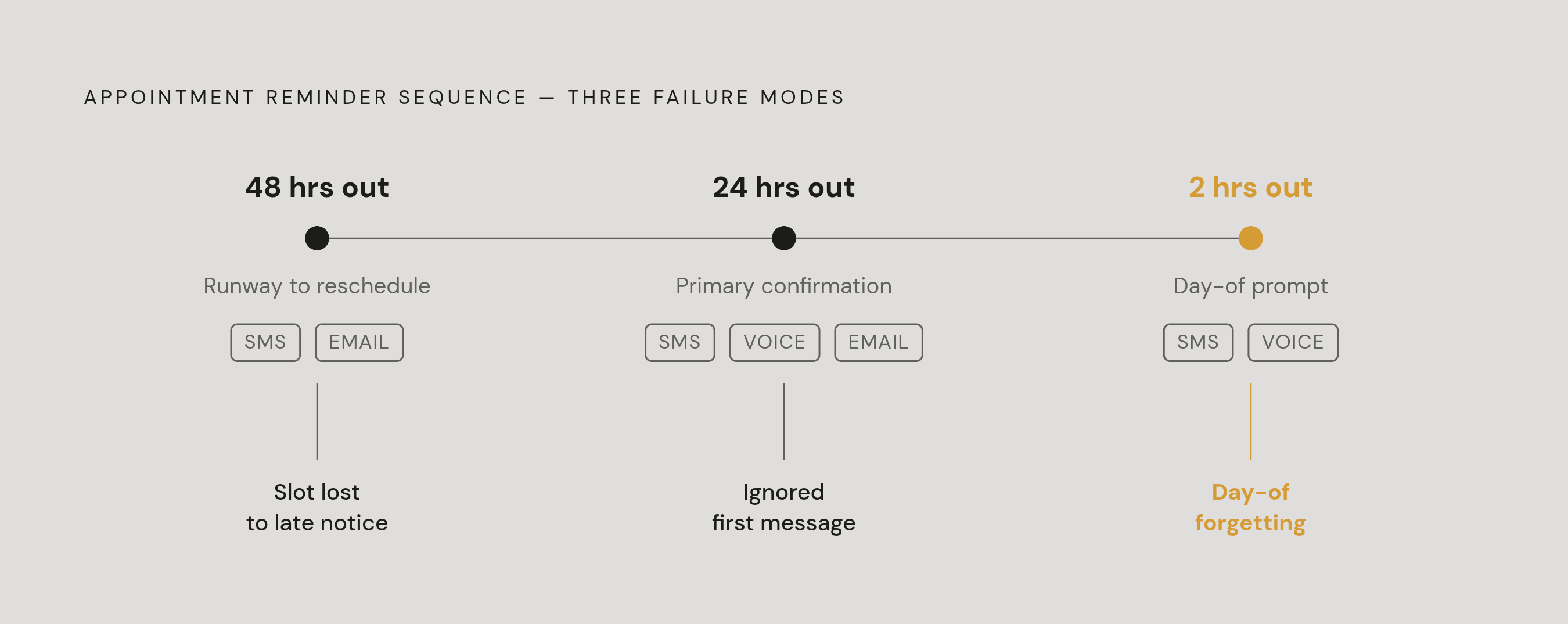
Timing carries as much weight as channel selection, maybe more. A reminder sent too early gets forgotten by the time the appointment arrives; one sent too late leaves no room to fill the slot if the patient can't make it. Practices relying on a single reminder, sent once through one channel, are leaving confirmation rate on the table, and that's the mistake worth fixing first, before touching anything else.
A three-touch sequence beats any single blast, because each touch answers a different failure mode instead of repeating the same message. A 48-hour reminder gives the patient runway to reschedule without the practice losing the slot outright. A 24-hour reminder is the primary confirmation touchpoint for most patients, catching anyone who ignored the first message. A 2-hour reminder is the last nudge, aimed squarely at day-of forgetting, which is a different problem entirely from never knowing about the appointment in the first place.
The bigger upgrade is whether the patient can respond at all, beyond simple frequency. One-way reminders inform; two-way SMS confirms. That difference changes what happens operationally: a reply to confirm, reschedule, or cancel routes directly back into the schedule instead of sitting in a text thread nobody's monitoring. Curogram's Schedule Filler integration with athenahealth runs on exactly this model, and the vendor reports no-show rates dropping by as much as 75%. That figure comes from the vendor, not an independent audit, so any practice adopting a tool like this should track its own baseline before and after rather than assume the reported number transfers directly.
Matching channel to patient matters more than treating the whole population as one block, and this is where most reminder setups quietly fail. Younger, smartphone-native patients respond fastest to SMS. Older patients, or anyone with a documented history of skipping the portal, need voice or SMS as a fallback rather than a portal-only notice. Patients heading into a visit that requires prep work do best with email as either the primary channel or a supplement to whatever else they're getting.
Third-party integrations that extend what athenahealth's reminders can do
athenahealth Marketplace exists precisely so practices don't have to leave the platform to get more out of it. A handful of integrations extend the native reminder system in ways that matter operationally, and the differences between them are worth taking seriously before signing anything.
Weave, integrated with athenahealth since March 2024, keeps patient contact and appointment data current through a daily sync. That sounds minor until reminders start bouncing because a phone number changed six months ago and nobody updated it. Weave also adds a communication layer beyond reminders themselves: two-way texting, automatic text-back on missed calls, and review requests, which addresses the stale-contact problem that quietly undermines deliverability across every channel a practice uses.
Curogram's Schedule Filler, mentioned above for its no-show figures, runs two-way SMS at the 48-, 24-, and 2-hour marks and is built specifically to surface open slots and pull from a waitlist the moment a cancellation comes in.
DoctorConnect syncs appointments from athenahealth and sends reminders without anyone triggering them manually, supporting voice, SMS, and email, configurable per patient based on whatever preference is on file.
CallMyDoc's ScheduleMyPatient™ takes a different angle: phone-based self-scheduling that lets patients book in around 40 seconds without logging into a portal at all. It integrates with athenahealth's existing scheduling rules and accepts bookings at any hour. The vendor reports a 40% reduction in no-shows tied to its automated reminder layer, again a vendor-reported figure rather than an independently verified one.
Choosing among these comes down to a short set of questions, and most practices skip straight past them to the sales pitch. Does the integration sync bidirectionally, or does staff still update two systems by hand? Does it handle rescheduling inside athenahealth's own scheduler, or does it just send a notification and leave the rest to the practice? What does setup actually require: API credentials, manual configuration, ongoing maintenance somebody has to own long after the sales call ends? Skip these questions and the integration becomes one more system to babysit rather than one less.
Where reminder automation still hands work back to staff
Reminders confirm that a patient plans to show up, but they don't complete anything else the visit depends on. Insurance eligibility still needs verification before the appointment happens, and a reply that surfaces a new address or phone number still needs a human to update the chart. Prior authorization tied to that visit sits completely untouched by the reminder system, no matter how well the reminder itself performed.
Cancellations create their own follow-on work. When a reminder response frees a slot, finding a replacement patient becomes a new task, and in plenty of practices, waitlist management is still a phone-and-spreadsheet exercise even after the reminder layer has been automated. The time saved by automating the reminder gets spent right back on manually refilling the hole the reminder just created. That's a strange kind of progress.
Patients who don't respond to any channel are the clearest case: the automation stops contributing, and the phone call comes back to staff exactly like it always did. Given that fewer than 40% of patients use the portal, a real share of the population is only reachable through voice or SMS in the first place. If those channels aren't configured correctly inside athenahealth, the reminder doesn't fail loudly; it just never lands, and nobody notices until the no-show shows up on the schedule.
Automation, as it stands today, handles the easy cases cleanly and hands every hard case back to a human. That's precisely the terrain where AI agents start to matter: finishing the job the reminder started, rather than just making the reminder itself nicer.
How computer-use AI agents handle the workflow steps reminders can't reach
Computer-use agents operate athenaOne the way a staff member would: reading what's on screen, clicking, typing, moving between tabs, without needing API access or a custom integration built ahead of time. That distinction matters because it lets these agents work in places reminder tools never reach, namely the scheduling, eligibility, and billing layers sitting behind the confirmation step. Nothing about the practice's existing athenahealth setup needs to change to support this. The EHR stays in place with the existing workflow intact, which is a different proposition than most vendors are selling.
What that unlocks is fairly concrete. An agent can verify insurance eligibility automatically for every confirmed appointment rather than waiting for a front-desk check the morning of. It can update patient demographics the moment a reply or callback surfaces new information, instead of that update sitting in a queue for days. It can pull a cancelled slot back into open availability and work through a waitlist to fill it, closing the loop that reminder tools open but never finish. And for the patient who never responds to any channel, an agent can route that case to staff with full context attached: appointment type, contact history, payer information, so the follow-up call starts from something other than zero.
The technical shift making this possible is multimodal AI that reads a screen visually, the way a person does, rather than depending on the underlying HTML structure or an accessibility tree that may or may not expose what's needed. That's what lets an agent move through any screen in athenaOne the same way a trained employee would, without a specialized integration project behind it. Deployment timelines reflect that difference, typically far shorter than a conventional integration project requiring a dedicated IT rollout.
HIPAA compliance requirements that apply to any reminder or automation tool connected to athenahealth
Any reminder carrying appointment details is handling protected health information, full stop. A patient's name paired with an appointment date and a provider qualifies as PHI under the Privacy Rule, which means SMS and email channels carrying that information require a signed Business Associate Agreement with whatever vendor sends them. This isn't a negotiable clause buried in a contract, and treating it as one is the single most avoidable mistake a practice can make here. Without a BAA in place, the practice itself absorbs the liability if something goes wrong, and that allocation of risk should decide the vendor conversation before pricing does.
Beyond the BAA, a few things are worth requiring from any vendor before go-live. SOC 2 Type II certification covers a vendor's security controls over a sustained audit period rather than a single point in time, while HIPAA certification separately confirms a vendor's internal policies and technical safeguards meet the Security Rule's requirements. Data residency and retention policy, meaning where PHI actually sits, how long it's kept, and how it gets deleted, should be documented and available on request, not something a practice has to dig for after the fact.
HHS OCR proposed an update to the HIPAA Security Rule in January 2025, tightening security expectations for covered entities and their vendors. Vendor certifications that predate that update may not yet reflect where the standard is headed, which is worth checking rather than assuming away.
athenahealth Marketplace vetting gives practices a reasonable baseline, but treating it as the finish line is a mistake practices keep making anyway. Requesting compliance documentation directly from any integrated vendor remains the practice's own responsibility, not something to outsource to a Marketplace listing. For AI agents operating inside the EHR on staff's behalf, the compliance floor doesn't move: SOC 2 Type II and HIPAA certification are baseline requirements, not premium add-ons a vendor gets to charge extra for.
Building a reminder and automation setup that actually runs itself
Start with athenahealth's native configuration before layering anything else on top, and resist the urge to buy a fix before the built-in tools have been tuned properly. Confirm channels actually map to the preferences on file for each patient, and set timing for a multi-touch sequence with, at minimum, a 24-hour and a same-day reminder. Add a rescheduling option to every outbound message rather than just the ones someone remembered to build it into. Audit portal adoption directly, too: if fewer than 40% of patients are using it, portal-only notifications are leaving a large share of the schedule unreached, and no amount of reminder tuning fixes that on its own.
From there, a Marketplace integration earns its place when two-way response or automated waitlist fill becomes the actual bottleneck, not before. Buying an integration to solve a problem native configuration hasn't been tuned to solve yet is money spent in the wrong order, and it's the second most common mistake after skipping the BAA. The evaluation criteria stay the same regardless of which vendor gets picked: bidirectional sync, rescheduling that happens inside athenahealth's own scheduler rather than alongside it, and compliance documentation confirmed before anything goes live.
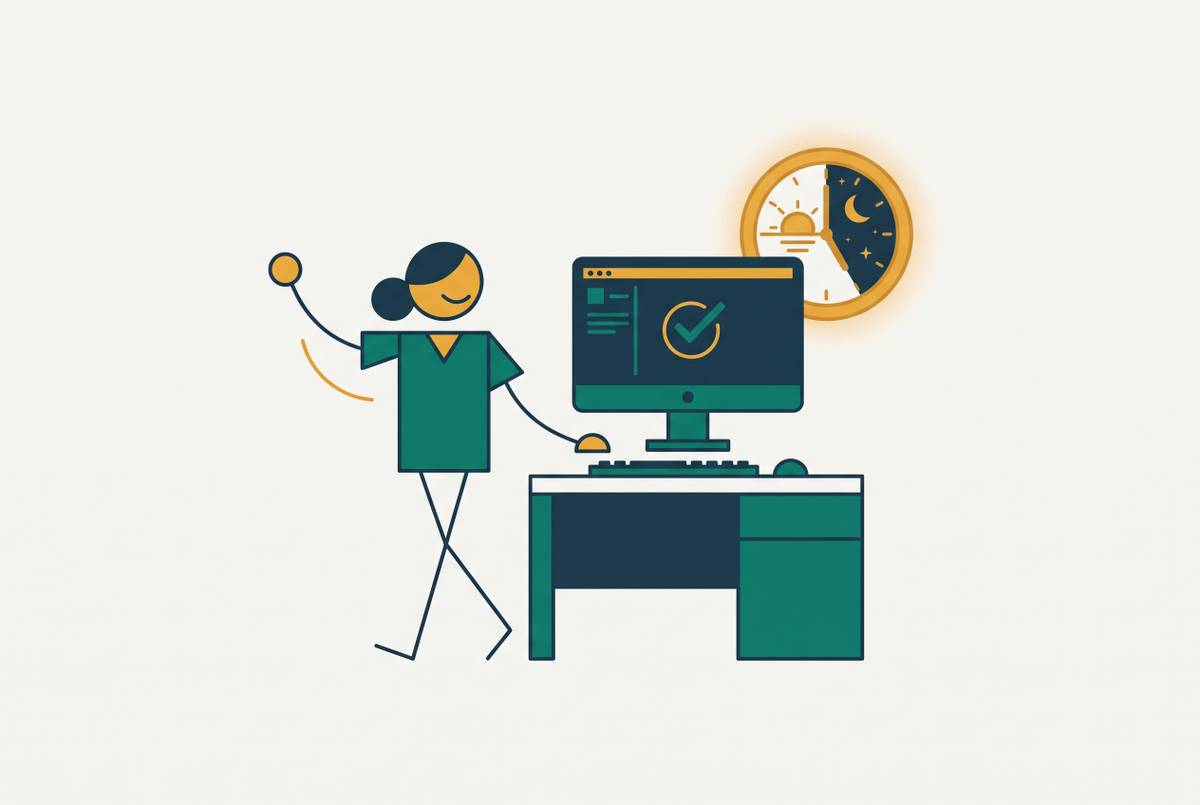
What's left after that is the manual work that survives every layer of reminder automation: eligibility verification, demographics updates, non-responder outreach, waitlist management. These are exactly the workflows where a computer-use agent adds the next layer of reclaimed staff time, because reminders were never built to touch them in the first place, and no amount of channel tuning changes that.
The real test of whether a setup runs itself is whether staff spend their day on exceptions rather than routine. Reminders should fire on schedule without anyone pushing a button. A cancellation should trigger slot recovery without a spreadsheet. Eligibility should already be verified by the time the patient walks in, not checked hurriedly at the front desk while they wait. Staff attention belongs on the patient standing in front of them, not on chasing down the one who might not show up at all.