Charge Capture Gaps in eClinicalWorks
Unpacking where charge capture fails in eClinicalWorks and how to fix it.
Charge capture gaps in eClinicalWorks follow a small number of predictable patterns: late charge entry, documentation that doesn't match what got billed, service lines that go unbundled or missed entirely. This piece maps where in the eCW workflow each of those failures actually starts, because the origin point determines whether the fix holds or just moves the problem downstream.
The stakes are not abstract. Denials and uncompensated care cost 2,300 hospitals more than $48 billion in 2025, a 25% jump over the prior year according to Healthcare Finance News, and charge capture failures sit upstream of a large share of that number. CMS's FY2025 CERT data found insufficient documentation to be the single leading cause of $28.83 billion in Medicare fee-for-service improper payments. Documentation gaps and charge gaps are the same problem wearing different clothes. Industry benchmarks call for charges to be captured within three to five days of service, with late charges held under 2% of the total; most practices track neither number, which means most practices have no real idea how exposed they are.
Scale is what makes eClinicalWorks the right place to study this. It's the most widely deployed ambulatory EHR by provider count, used by more than 150,000 physicians. Whatever structural gaps exist in how the platform handles charge capture play out across a meaningful share of American ambulatory medicine, every single day.
How the eClinicalWorks platform is built and where charge capture sits inside it
eCW is built as one integrated system: clinical documentation, scheduling, billing, and patient engagement all live on the same platform rather than as bolted-together modules. That integration gets marketed as a strength, and in most respects it is one. Still, a gap opened in one part of the system doesn't stay contained. A documentation shortfall in the exam room travels straight into billing with nothing built in to stop it.
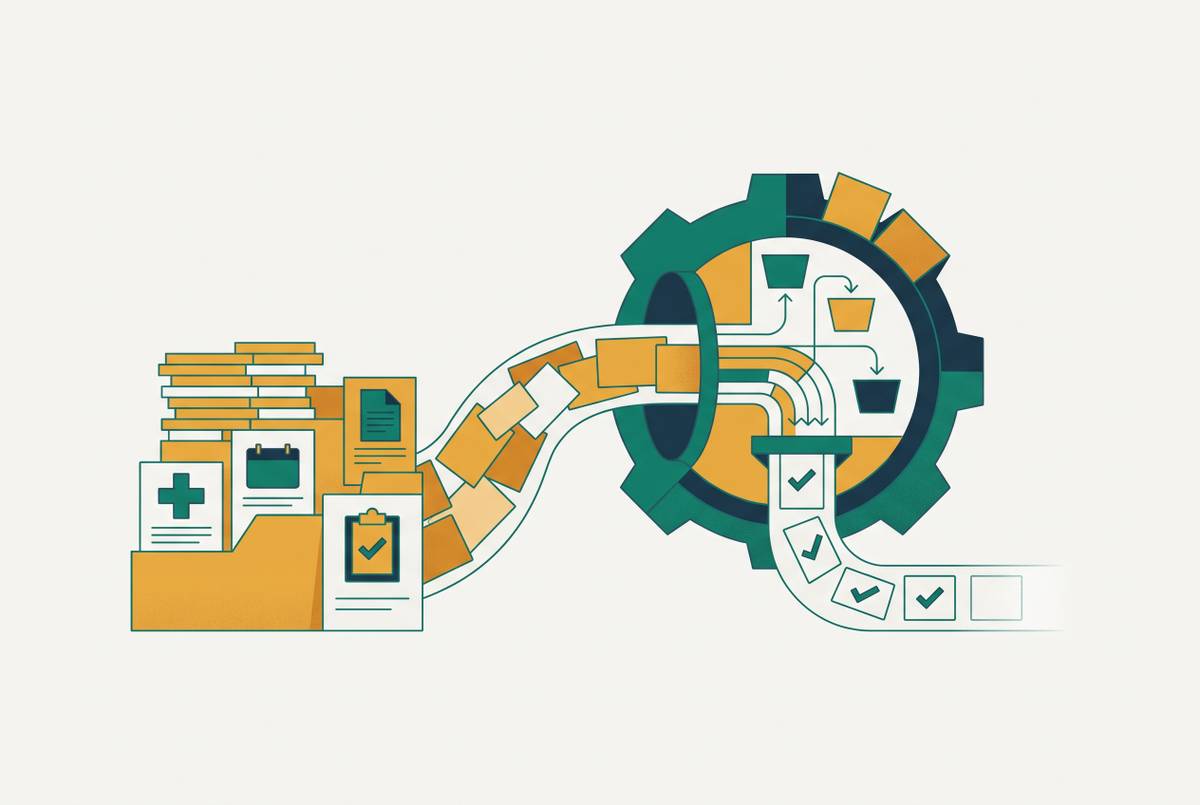
The Practice Management module is where that handoff happens. PM takes documented services, turns them into billable charges, scrubs the resulting claims, and sends them to payers. Work Queue Dashboards handle what comes after: claim status, denial resolution, accounts receivable follow-up. These tools are useful, but they're downstream by design. By the time a charge capture failure shows up in a work queue, it has usually already aged past the point where it's cheap to fix.
For multi-site practices, eCW offers the eBO Reporting Module and OpenConnect for centralized billing operations. Both are only as good as the charge data feeding them; neither one manufactures accuracy that wasn't there at the point of documentation.
Here is the part practices get backwards: eCW's flexibility gets treated as a pure asset, when it's really the source of most of the trouble described below. The platform can be configured dozens of different ways to match a specialty, a workflow, a staffing model. That same flexibility means misconfiguration, not clinical error, is the root cause behind most of the gaps in this piece. The handoff from documented encounter to posted charge is the one place nearly every failure type starts.
The unsigned-note bottleneck: how a missing provider signature holds an entire claim
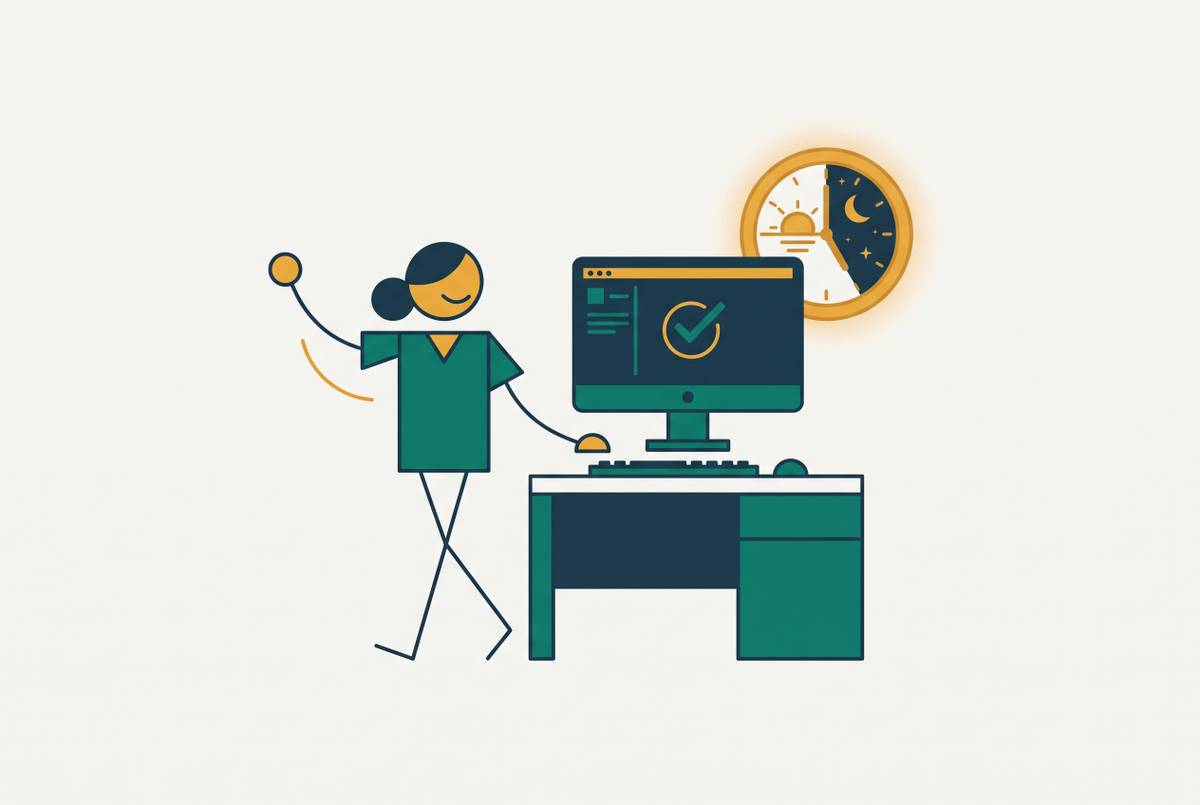
eCW holds a claim hostage to the provider's signature. No signed note means no posted charge and no submitted claim. That's standard behavior for major EHRs, eCW included, and the logic behind it is sound: an unsigned note is an unfinished clinical record. Treating a single missing signature as an acceptable cost to revenue that's otherwise ready to bill is a bad trade, though, and practices make it constantly without noticing.
The lag isn't evenly spread across the week. Notes from Monday through Wednesday tend to close on schedule. Thursday and Friday encounters pile up behind a full clinic schedule and a front office that's thinner on staff by week's end. A Friday note that doesn't get signed until the following Tuesday has already blown past the three-to-five-day capture benchmark before anyone in billing has even looked at it.
The fix is procedural, and only the procedural version works. Each provider needs an individual unsigned-note list, not a group reminder blasted to the whole department, with a 24-hour deadline measured from date of service. Daily open-encounter reports are what catch this before it compounds. Skip them, and a practice is managing signature lag after the fact instead of before it, which is another way of saying it isn't managing it at all.
Specialty-specific charge gaps: drugs, modifiers, and documentation details that eCW won't fill in automatically
In-office drug administration is one of the most consistent leak points, and it's worth being exact about why. A Toradol injection documented in the plan needs J1885 billed with the correct unit count. Depo-Provera needs J1050. Miss the J-code or the unit count in the note, and the charge either goes out wrong or doesn't go out at all. eCW bills only what's explicitly written down; treating the system as though it can infer the rest is where the money disappears.
The same logic holds well beyond drugs. Laterality, number of lesions removed, minutes spent in counseling: each detail changes which CPT code applies, and none of them get filled in automatically. eCW's specialty-specific templates exist to prompt for exactly this kind of detail, but only when someone has configured the workflow to match the practice's actual service mix. An out-of-box template built for general primary care will not prompt a dermatology practice to document lesion count, because nobody told it to.
The PM module can only translate what the documentation says. Vague plan notes produce vague charges, or no charge at all. What makes this category of gap expensive is that it's silent: the claim usually still goes out, just coded at a lower value than the service warranted. Nothing rejects, nothing lands in a denial report. It just quietly underpays, encounter after encounter, month after month, with no alarm anywhere in the system.
Stale fee schedules and the January reset problem
The charge description master, or CDM, drives everything the PM module bills. CPT and HCPCS code sets update every January, and the CDM has to be reviewed and revised by hand to keep pace. eCW does not do this automatically. Assuming otherwise is the single most expensive misconception a billing office can carry into the new year, and it's a more common one than most administrators would admit.
Skip that review and three things happen at once: deleted codes keep getting billed and keep getting denied, new codes never make it into the system, and the practice bills an entire year of encounters at the prior year's rates. This is a configuration failure, not a clinical one. It has nothing to do with how well providers document or how promptly they sign notes; it sits entirely outside the documentation workflow and touches every provider, every encounter, all year long.
Unlike signature lag, a stale CDM won't show up in open-encounter reports, because there's no open encounter to flag. The only way to catch it is a direct reconciliation of the CDM against the annual code release. In a high-volume practice, twelve months of undercoding on even one frequently billed service line adds up to a real, cumulative loss, and it's a loss nobody notices because nothing in the workflow is built to surface it.
The encounter-to-charge reconciliation gap and how it compounds the other failures
Reconciliation, at its core, is simple: pull the appointment list for a date range, pull the posted charges for that same range, and work the difference. Most practices do this rarely, inconsistently, or not at all, and that irregularity, not the math itself, is the actual gap.
Weekly beats monthly, and monthly beats "when someone has time." Running the comparison every Monday morning catches lag while it's still recoverable, before it ages past a payer's filing deadline. Skip it, and unsigned-note delays, missing J-codes, and stale CDM entries all pile up invisibly in the background, surfacing only once they land in a denial report or in AR aging. By then, recovery takes far more staff time than prevention would have.
Registration and eligibility errors make this worse. Bad demographic data captured at check-in causes claim rejections that look, on the surface, like a billing department failure. The failure actually happened before a note was ever opened, and reconciliation is exactly the kind of task built to expose it: repetitive, high-volume, governed by clear rules. It scales badly with manual staff and scales well with automation, and that distinction matters for what comes later in this piece.
Underused eClinicalWorks reporting features that would surface these gaps earlier
MGMA analysis from 2023 found that more than 34% of independent practices leave significant revenue on the table because they don't use available EHR reporting features. KLAS Research separately found that 41% of providers are unclear on which eCW performance data they should actually be using to optimize revenue. The data exists. The failure is that practices don't know which report answers which question, and that's a training gap, not a technology one.
eCW's eBO module and Work Queue Dashboards are built to surface exactly the gaps described above: open encounters sitting unsigned, charges posting later than they should, denial patterns clustered by service line. A practice that never configures or checks these reports is running on exception handling, catching problems only once a payer bounces a claim or an AR bucket ages past 90 days.
The reporting gap feeds itself. Without visibility into where charges actually fail, there's no internal pressure to fix the workflow generating the failures, and nobody escalates a problem they can't see.
What it takes to close these gaps systematically rather than one encounter at a time
Provider training on eCW's documentation tools and specialty templates matters, but it degrades fast without something reinforcing it day to day. A training session in January doesn't hold up against a packed Friday schedule in October. Treating a single training rollout as a permanent fix is how practices end up relearning the same lesson every year.
Charge reconciliation needs to be a standing process built into the calendar, not an occasional audit someone runs after a denial spike gets noticed. The same goes for CDM review: a scheduled event each year, owned by a named person, not a task that only happens after someone stumbles on a pattern of denied claims.
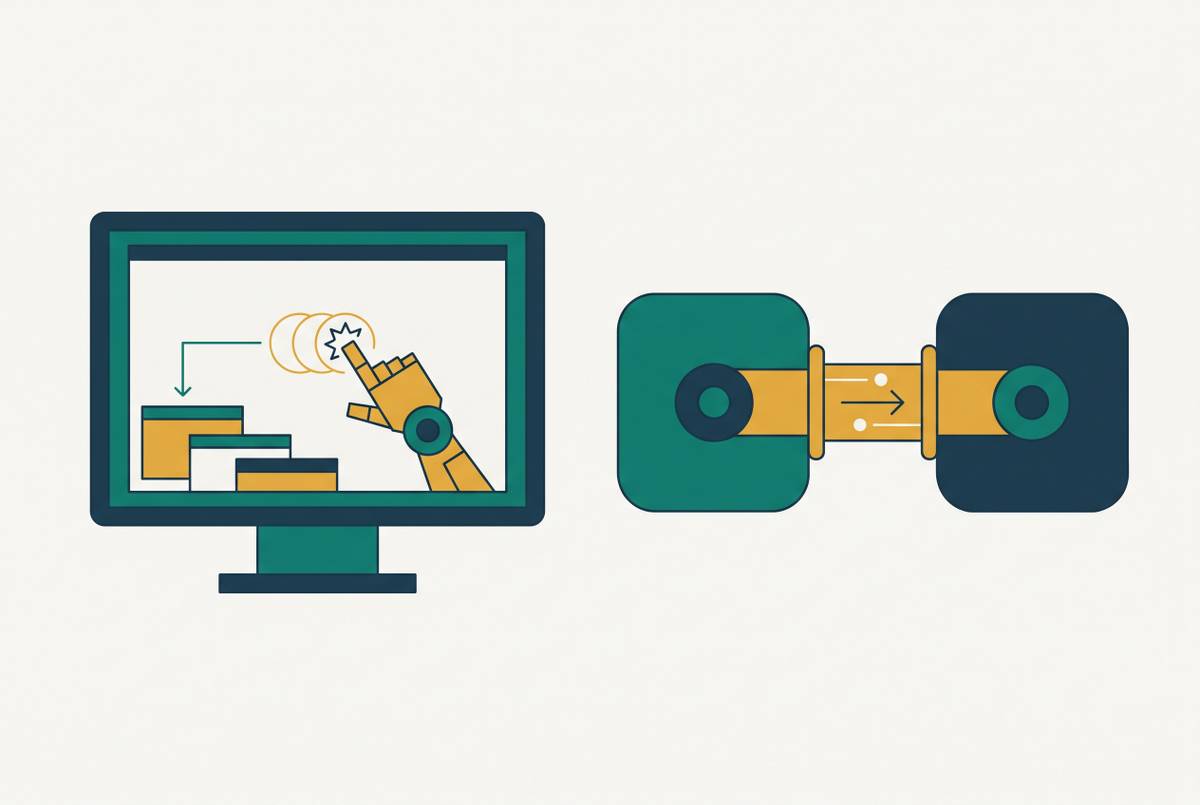
The weekly reconciliation workflow, appointment list against posted charges, is the strongest candidate for agent-based automation in this entire chain, and it belongs there first, ahead of anything requiring judgment. It's repetitive, follows clear rules, and produces a clean, checkable output. Computer-use agents can navigate eCW's PM module the way a staff member would: reading the screen, identifying unsigned encounters sitting in a work queue, flagging a service line that looks undercoded. None of that requires API access or a new integration layer bolted onto the EHR. It operates on the interface that's already there.
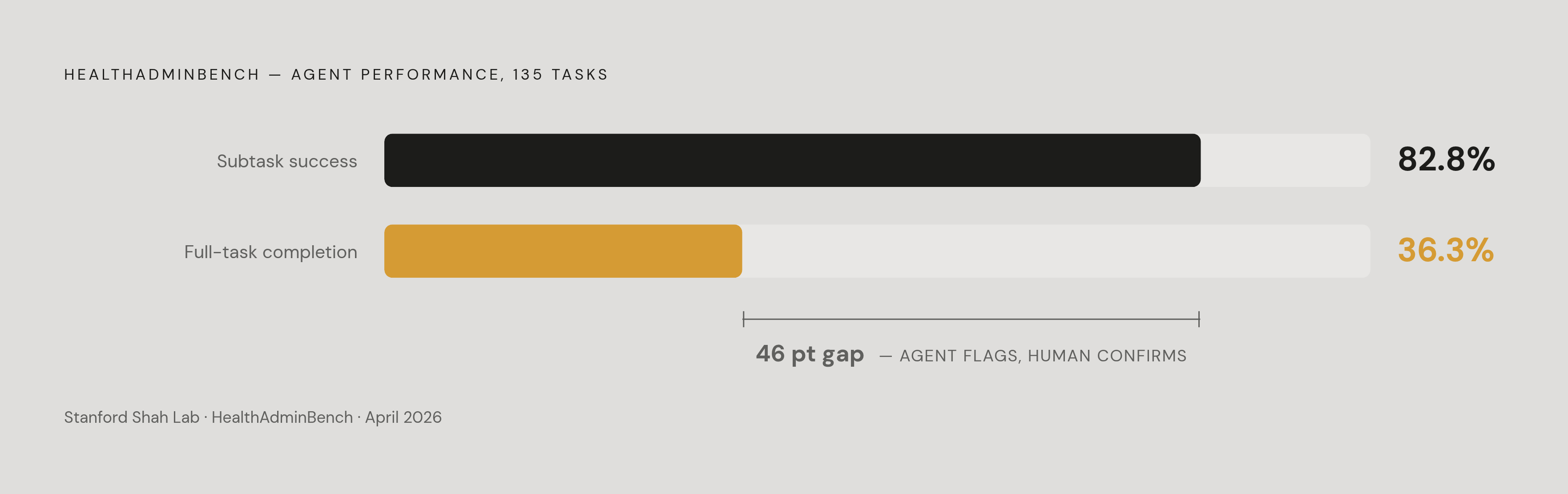
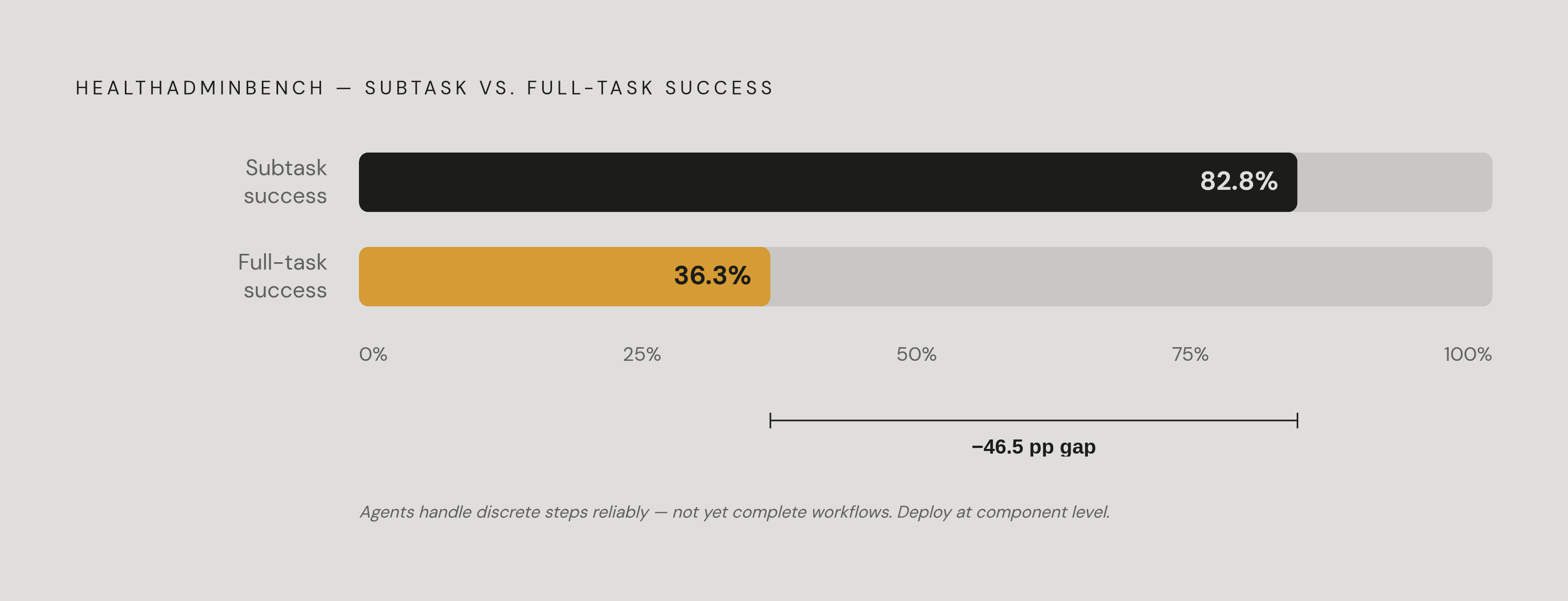
The evidence on how far this technology has come, and how far it still has to go, deserves to be stated plainly rather than rounded up in either direction. HealthAdminBench, a Stanford Shah Lab benchmark released in April 2026 covering 135 expert-defined healthcare administrative tasks in realistic GUI environments, found the best-performing agent completed full tasks successfully only 36.3% of the time. That's a real limit, and it argues for hybrid designs, where an agent flags and a human confirms, as the only defensible near-term approach for anything complex. The same benchmark found subtask success as high as 82.8%, which shows agents are already reliable at the discrete steps: catching an unsigned encounter, populating a missing J-code. Full-workflow autonomy is still out of reach, while component-level reliability sits close at hand already, and the gap between those two numbers is the whole argument for where this technology belongs first.
None of this requires ripping out eCW or building new integrations to get value. Agents that sit on top of the existing interface remove that barrier entirely. The end state worth building toward is a closed loop: reconciliation catches what's missing, reporting surfaces the pattern behind it, and automation absorbs the volume, freeing staff time for the exceptions that actually need a human's judgment. That loop is achievable inside eCW as it exists today. Building it takes deliberate operational work, not a software upgrade.