Scheduling Template Design for Mixed Appointment Type Practices
Scheduling Template Design for Mixed Appointment Type Practices
Why scheduling template design is a capacity-allocation problem, not a calendar problem
That assumption holds up fine in a single-appointment-type world. It falls apart the moment a practice runs multiple visit types through one provider's day, because follow-up demand and new-patient demand do not behave the same way, and a template that treats them interchangeably will always favor whichever one is easier to book.
New-patient wait times now average 31 days in major U.S. metros, up from 26 days in 2022 (the aggregate outcome of a million individual template decisions made without deliberate allocation logic) Best Patient Scheduling Software 2026: 15 Top Picks. Scheduling template design, done properly, is the discipline of encoding those allocation decisions on purpose: what type of visit goes in which slot, how long that slot runs, where it sits in the sequence of the day, and when it releases if unclaimed. If that work is skipped, the calendar will still fill up. It just won't fill up with the right patients.
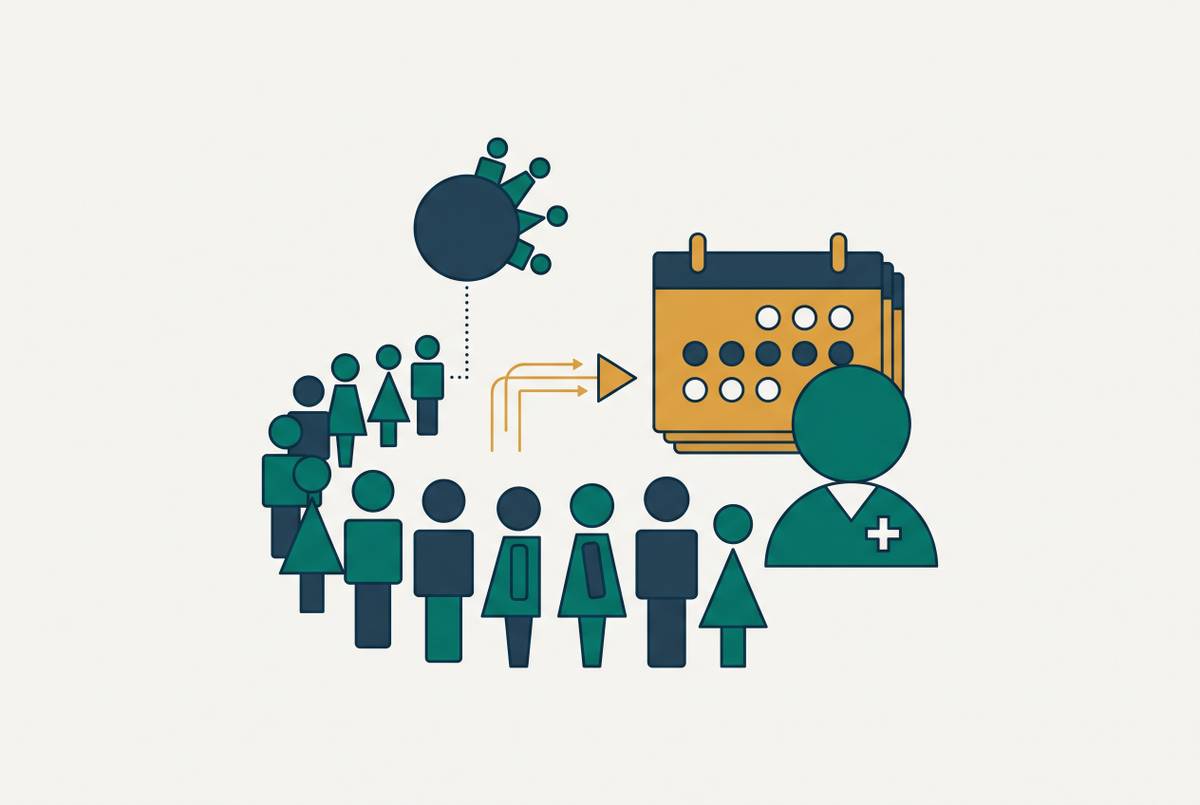
How different appointment types compete for the same provider time
Three structural differences drive that competition. Booking velocity is the second. Follow-ups get scheduled fast, often by a patient who has done this before and knows what to say to the front desk. New and referred patients hit friction at every step, insurance verification, referral paperwork, unfamiliarity with the intake process, and that friction slows conversion even when demand is genuinely there. Duration variance is the third: visit types differ in clinical time requirements, and a template built around an average duration shortchanges the longer visit types while wasting time on the shorter ones.
Those three factors combined give an unmanaged template a predictable bias. When slots are not typed, front desk staff default to booking whatever is easiest, and that is almost always the follow-up, because it is fast, familiar, and does not require anyone to chase down a referral fax. New-patient access gets crowded out, not through any deliberate decision but through the simple mechanics of what's convenient in the moment.
Picture a slot released at 8 AM. The referred new patient who should have had priority for that slot has not even received the outreach call yet. Nobody made a decision to deprioritize that referral. The template simply allowed the faster-moving demand to win, and it will keep winning every single day until something changes the rules of the competition. This piece exists to solve that problem, and the fix starts with how slots get typed.
The slot-typing decision: why soft suggestions fail and hard locks work
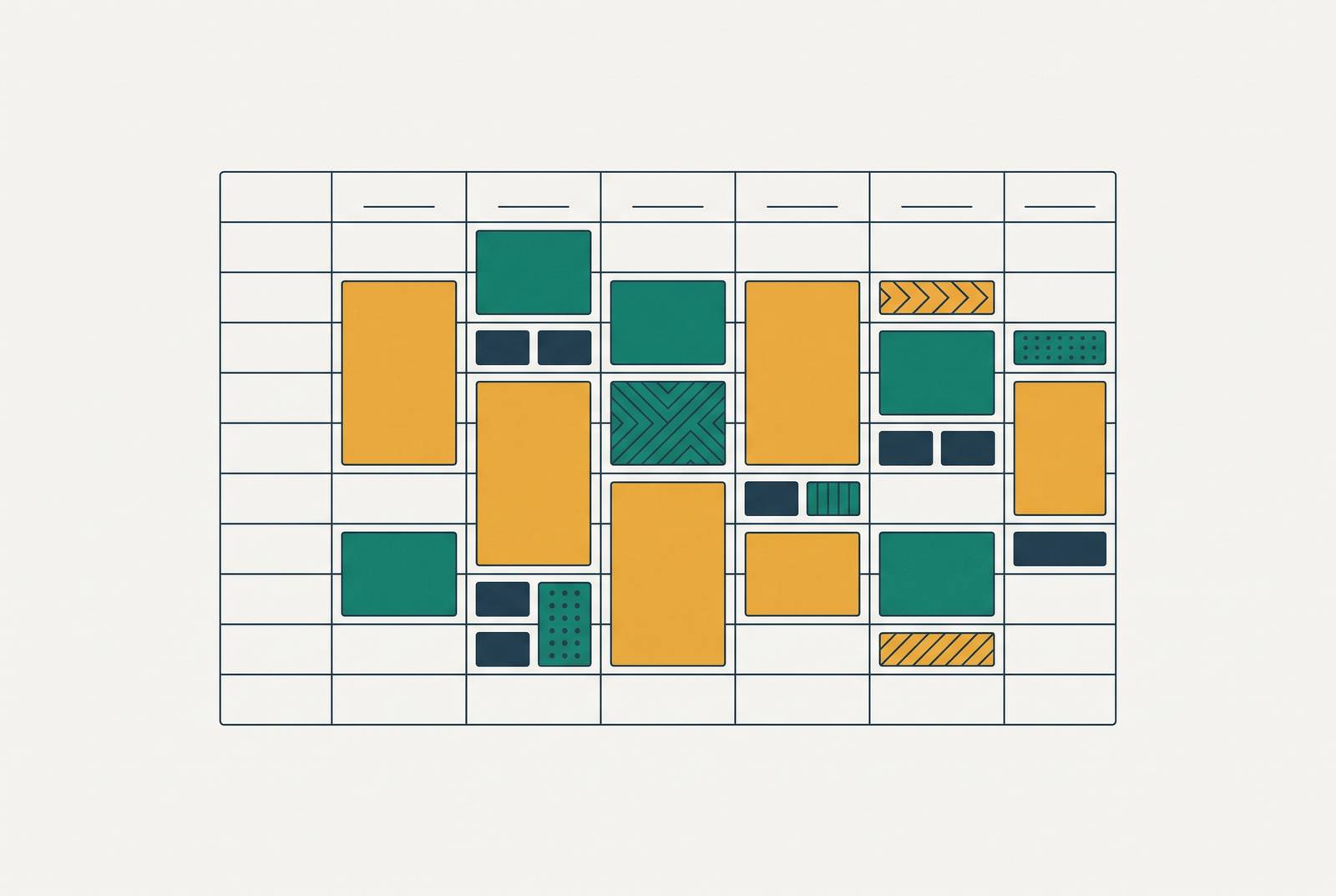
Practices generally land on one of two approaches to slot typing. The soft version relies on notes in the schedule, verbal agreements among staff, maybe a color-coding convention nobody enforces.
The hard version locks slot type at the system level: a slot labeled "NEW" in the EHR cannot be booked as a follow-up without a deliberate override, and the reverse holds too. That distinction matters more than it sounds like it should. That is what happens by default when the system does not stop a well-intentioned scheduler from doing the expedient thing under pressure, not a training problem.
Slot typing, in other words, is not a naming convention that lives in a policy binder somewhere. It is a system configuration decision, and it requires EHR-level enforcement, not staff agreement. Hard typing also unlocks something soft typing never could: real reporting. Once slots are typed and locked, a practice can measure fill rate by type, spot which categories are chronically over- or under-booked, and make deliberate calls about release timing instead of guessing.
The predictable objection is that hard locks feel rigid, that a practice loses the flexibility to adapt on a busy day. The answer is that flexibility belongs somewhere else in the system, in the release-timing layer, not in the slot-type layer itself. The type of a slot should not bend under pressure. When that slot releases to other demand, and under what conditions, can and should. Why soft suggestions fail: the source material is explicit, without locking visit types in the EHR, schedulers will fill follow-up slots with new patients during high-volume periods and "control is lost"; front desk staff will "just put them where there is space"
How to set the target mix: matching slot allocation to actual demand patterns
Once slots are typed and locked, a practice still has to decide how many of each type to build into the week, and that number should come from the practice's own demand data. No-show and cancellation rates by type matter too, since they differ meaningfully across visit categories and affect how much buffer capacity needs to sit in reserve. Referral conversion rates, meaning how many referred patients actually book within a given window, round out the picture, alongside provider utilization broken down by day of week and time of day.
Historical booking volume alone is a flawed proxy: it measures what the old template allowed, not what patients actually wanted. If new-patient slots have been scarce for months, historical new-patient booking counts will understate true demand, because a large share of that demand never got a slot to book. Referral volume, inbound call attempts specifically for new appointments, and waitlist depth are better indicators, since they reveal, when measured directly, the suppressed demand a constrained template was never able to serve.
Demand shifts by day and by hour, and the template should bend with it, not against it. A practice might concentrate new-patient slots in mid-week morning blocks, where provider efficiency tends to run highest and same-day cancellation risk tends to run lowest, while holding urgent and same-day slots at the tail end of each half-day block, releasing them to other demand only after a defined cutoff if they go unfilled.
The MGMA Stat poll found that roughly two-thirds of medical groups reported new-patient wait times had stayed flat or gotten shorter over the prior year. The remaining third, still watching wait times climb, are very likely running templates that never encoded this kind of allocation logic in the first place. And because payor mix, referral patterns, and provider panels all shift over time, the target mix itself needs a quarterly look. Historical appointment volume by type (trailing 90 days minimum)
Duration design: how slot length decisions ripple through the day
Slot length is a tension between two competing needs. Longer slots give complex visit types the clinical time they actually require. Shorter slots push more throughput through the same provider day. Pushing too far in the throughput direction causes complexity to overrun the clock, creating rework and delay that the template never accounted for.
That delay does not stay contained to one appointment. A template that underestimates new-patient visit length by 10 minutes creates cumulative delays that push charting into the evening. This is one of the more direct, measurable consequences of poor template design: it raises provider burnout long before it raises utilization-report figures.
Three failure patterns tend to produce that outcome. The first is using one slot duration for every visit type simply because that is the EHR's default setting. The second is setting duration to the median visit length without accounting for variance, which quietly punishes both the complex new patient and the post-procedure follow-up, since both tend to run long. The third is building no buffer at all into the day, treating every single minute of provider time as bookable, which leaves zero room to absorb the inevitable overrun.
Buffer blocks address that third failure directly: short, deliberately placed gaps, usually mid-morning and mid-afternoon, that exist specifically to absorb overruns before they cascade into the rest of the day. The fix for duration miscalibration generally is not guesswork, either. It's actual encounter time data pulled from EHR records, calibrated by visit type, rather than whatever duration assumption the legacy template happened to inherit. And a shorter, well-calibrated slot is far easier to backfill on short notice than a long, complex-visit slot, so duration decisions made today shape how much of tomorrow's cancelled capacity actually gets recovered.
Sequence logic: how appointment type ordering within the day affects throughput and recovery
Order matters as much as typing and duration do. Where a visit type sits in the day's sequence shapes rooming workflow, clinical prep time, and the cognitive load carried by both provider and staff, and a poorly sequenced day can undo the benefit of otherwise well-typed, well-durationed slots.
A few sequencing mistakes recur. Alternating long, complex visits with short, routine ones in no particular pattern prevents staff from staging the next patient efficiently, since prep requirements swing wildly from one slot to the next. Placing new patients at the end of the day stacks intake friction on top of provider fatigue, right when neither the provider nor the schedule has any slack left to absorb it. And clustering same-day and urgent slots at the very start of the morning, before staff have even processed the overnight cancellations, means the day opens on the least stable footing available.
A more deliberate approach groups visit types by shared prep requirements and positions the highest-complexity new-patient visits in the window where provider efficiency tends to peak, generally mid-morning, after the day has found its rhythm but before fatigue sets in.
Sequence is also, quietly, the mechanism that protects referral conversion. If a referred new patient is given a defined position in the day's sequence, and that position defaults back to follow-up demand the moment it goes unfilled, the template is actively working against the referral pipeline, one unfilled slot at a time. The same-day and urgent slot position matters for cancellation recovery: slots held at the end of a half-day block, released to the general queue at a defined cutoff time (e.g., 24 hours before the session), give the practice the best chance of filling cancellations with appropriate appointment types rather than whatever is easiest to book
How self-scheduling changes what template enforcement requires
Self-scheduling in 2026 means something specific: a patient on their phone at 10 PM books a real slot that shows up in the EHR immediately, insurance already pre-validated, visit type already matched correctly, not a request form that sits in a queue until staff process it the next morning Best Patient Scheduling Software 2026: 15 Top Picks. Roughly 80 percent of patients say they want exactly that capability, and the practices that have not built toward it are very likely absorbing that same demand through phone queues that add delay on one end and staff burden on the other.
That shift raises the stakes on everything covered so far. When a patient books directly, there is no human scheduler standing in the loop to catch a mismatched visit type or override a bad slot choice. The rules for typing, duration, and sequencing have to be embedded directly in the booking logic itself.
Template-aware self-scheduling needs a few things working in concert. Visit type selection has to translate patient-facing language into the correct template category, so a patient who selects "first visit" gets routed to a NEW slot specifically, not just the next available opening on the calendar. Insurance needs pre-validation before a slot locks in, so an unverified patient does not sit on a slot a cleared referral would have filled. And slot availability has to reflect real-time EHR state.
The referral data here is striking: inbound specialty referrals that route through a self-scheduling link embedded in the referral confirmation text convert at two to three times the rate of referrals that require a phone call. That gap is not a marketing win, it is a template-design payoff, and it only holds up because the link routes to a slot that is correctly typed and genuinely available. Self-scheduling, in short, does not make template design less important. It raises the cost of getting it wrong, because errors in typing or sequencing now execute automatically, at volume, with no one there to catch them.
How template design shapes cancellation recovery
Cancellation recovery gets treated as a reminder problem more often than it should be. Reminders help, no argument there, electronic reminders make patients 23 percent more likely to show up and 25 percent less likely to miss a visit. But a reminder only reduces how often a cancellation happens. It does nothing for the slot once a patient cancels anyway, and cancellations happen regardless of how good the reminder system is. Recovery, at its core, is a capacity-structure problem: a practice cannot fill a slot it has no defined mechanism for releasing and re-matching.
Three template elements determine how much of that lost capacity actually comes back. Hold-and-release timing is the first: slots reserved for a specific type need a defined cutoff at which they open to a waitlist or same-day queue, otherwise they simply sit empty until the appointment time passes. Waitlist structure is the second, and it matters substantially: a waitlist that captures appointment type preference, provider preference, insurance, and availability window can be matched against a cancelled slot algorithmically, while a flat call-back list cannot do much more than get worked in the order it was written down. Slot duration and position, covered earlier, come back into play here too, since a short, early-day cancellation is genuinely recoverable, while a long, complex-visit cancellation late in the day usually is not. A template that stacks new-patient complexity at the end of the day is structurally limiting its own recovery rate before a single cancellation even happens.
The practices that recover the most cancelled capacity tend to treat the waitlist as an extension of the template itself. The template defines the slot. The waitlist's only job is filling it. Computer-use AI agents are starting to close that loop without a person in the middle: an agent that watches the schedule for cancellations, checks them against a structured waitlist, and reaches out directly to the best-matched patient extends the template's recovery logic into an automated action rather than a manual one. This is not a distant, speculative idea, either. About 61 percent of organizations already report building toward or funding agentic AI initiatives, and scheduling and waitlist management sit among the leading areas where that work is landing first Best Patient Scheduling Software 2026: 15 Top Picks.
How template design scales across multi-location and portfolio-level practices
Everything above gets harder, not easier, once a practice runs multiple locations. Each site tends to develop its own template habits, its own informal conventions for slot typing and release timing, and the result is uneven new-patient access from one location to the next, inconsistent provider utilization, and no real way to route demand intelligently across the network as a whole.
The cost of that inconsistency is concrete. A patient referred into the practice cannot be matched to the next available slot across the entire system, only to whatever the originating location happens to have open, even when a sister site down the road has capacity sitting unused. Cancellation recovery stays siloed too, a cancellation at one clinic cannot draw on a waitlisted patient sitting at another. And reporting breaks down at the portfolio level, since new-patient throughput and provider utilization are not comparable across sites when the underlying template inputs differ from location to location.
The structural fix is a centralized access model: a unified queue that routes referrals and new-patient requests through enterprise-level slot rules, so a high-priority new patient does not get deprioritized simply because one particular location happens to favor easier, faster-to-book established visits. Real governance at that scale needs three things a siloed model cannot offer. A common slot taxonomy has to hold across every site, the same type labels, the same duration conventions, the same release-timing rules, so a NEW slot means the same thing in every clinic. Cross-location visibility into real-time availability has to exist, so demand can actually move to wherever capacity sits. Scale just multiplies the cost of a scheduling template not doing what it needs to do.